
Water parks and splash pads are among the most vibrant and engaging outdoor attractions communities build. But when it comes to surfacing these wet play environments, the right material isn’t just about looks — it’s about safety, performance, durability, comfort, and long-term value.
Selecting the ideal surface helps protect guests, meets accessibility standards, stands up to constant moisture, and creates an inviting space for families and visitors of all ages.
Here’s what you need to know when choosing surfacing for your water play area.
Why Surfacing Matters in Aquatic Play Areas
Splash pads and water parks differ from traditional playgrounds because they are constantly exposed to water. The surface needs to:
- Provide excellent traction, even when wet
- Reduce slips and falls with built-in slip-resistant properties
- Offer impact protection for falls, especially for young children
- Stand up to UV exposure, chlorine, and other chemicals
- Be comfortable underfoot for barefoot play
- Meet ADA accessibility requirements so everyone can enjoy the space
Without the proper surfacing, hard materials like bare concrete or asphalt can become unsafe — especially when wet and worn.
Top Surfacing Options for Water Parks & Splash Pads
Poured-in-Place (PIP) Rubber Surfacing
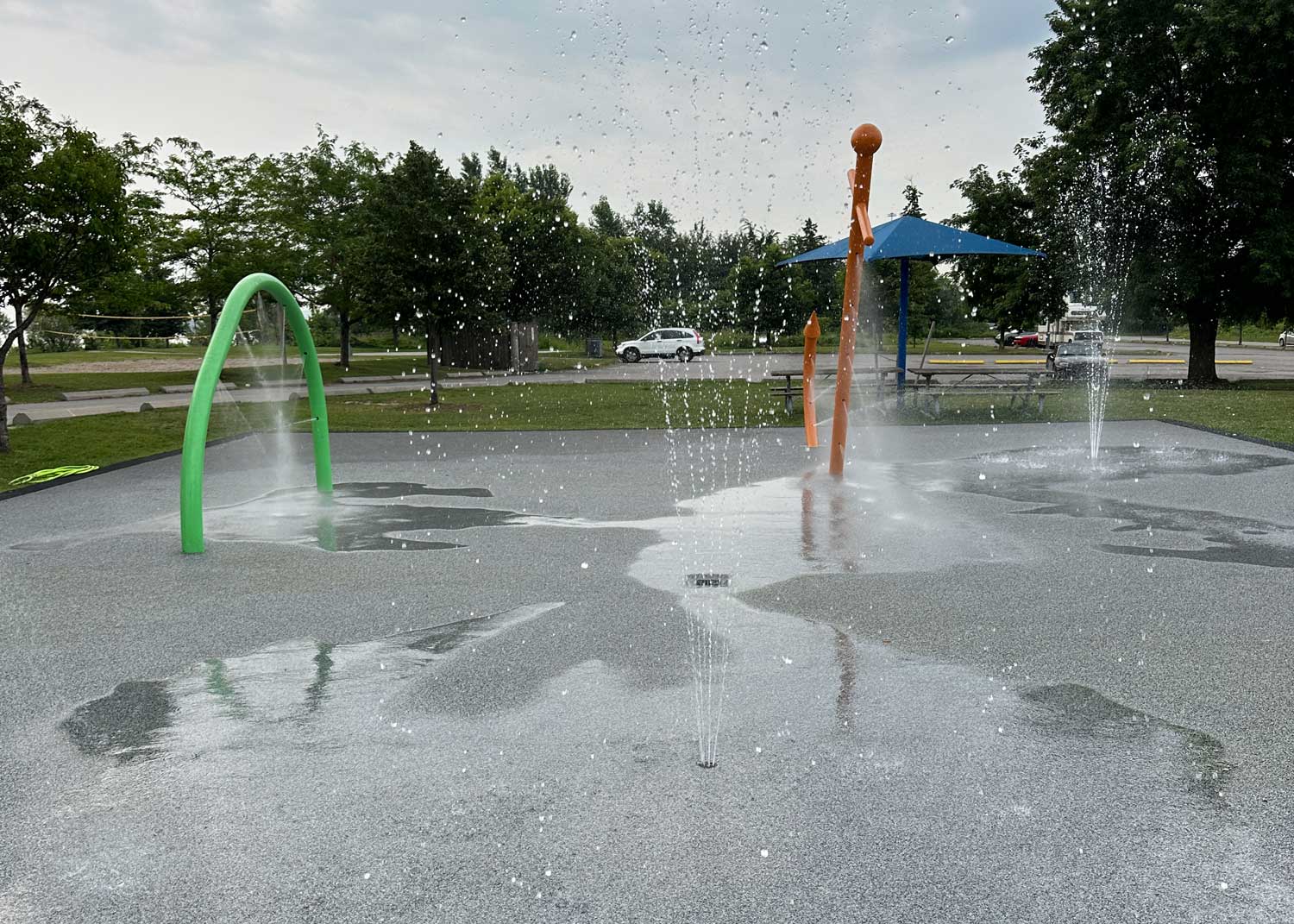
PIP rubber is one of the most popular surfacing choices for splash pads and aquatic environments. This custom-installed system combines recycled rubber granules with a binder to create a seamless, flexible surface that’s engineered specifically for safety.
Benefits:
✅ Excellent slip resistance and traction in wet conditions
✅ Impact-attenuating cushioning to help mitigate fall injuries
✅ Smooth, ADA-compliant finish for accessibility
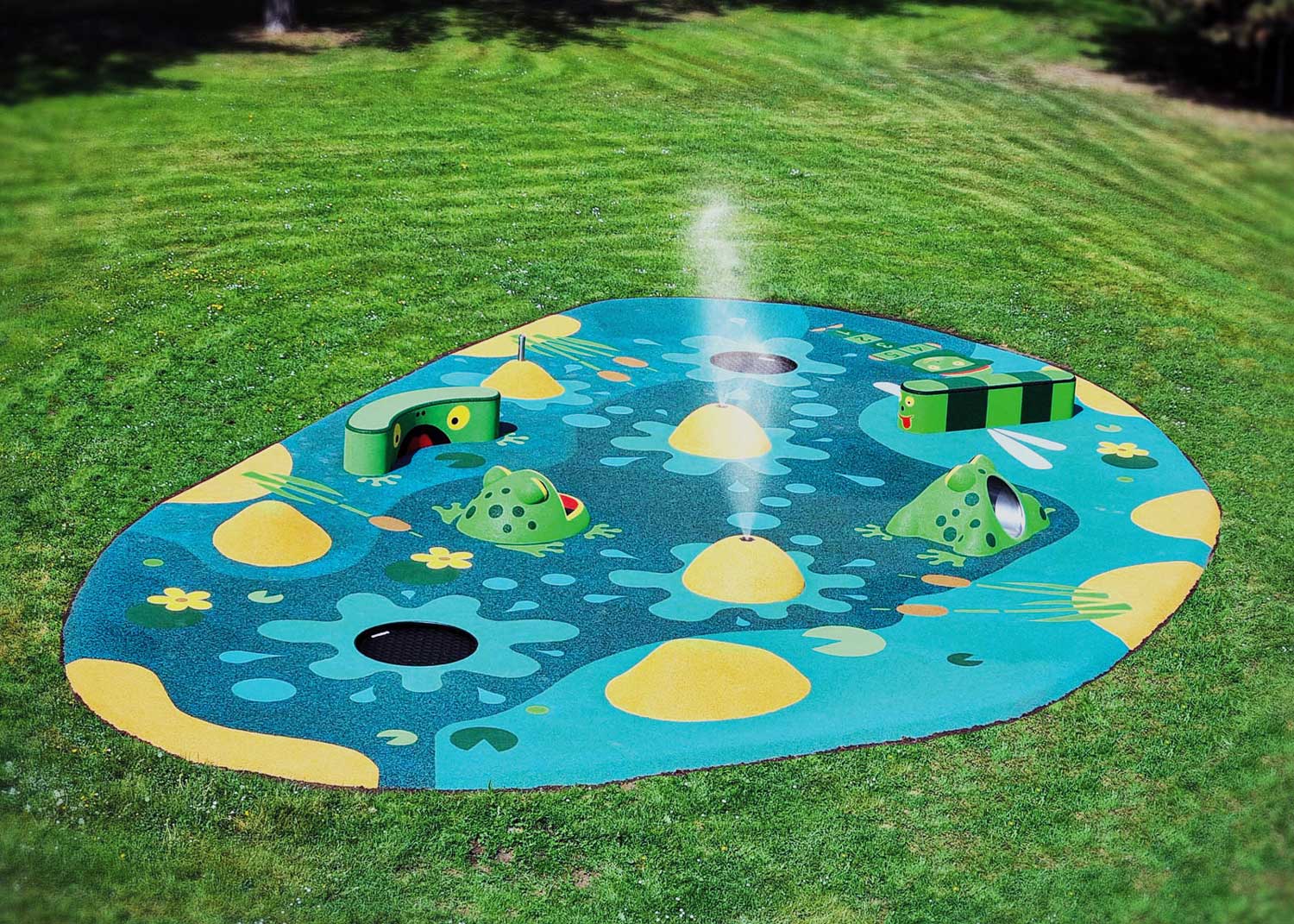
✅ Custom colors, graphics, and design options to match any theme
✅ UV- and chemical-resistant for long life in outdoor environments
PIP rubber surfacing minimizes risk, enhances comfort underfoot, and gives designers creative freedom to develop engaging splash pad spaces.

Rubber Safety Tiles
Modular rubber tiles are another great option, especially for projects where future repairs or localized surface replacement may be needed.
Pros:
- Slip-resistant, textured surface
- Easy to install and replace individual pieces
- Durable under heavy foot traffic
- Can be designed to meet specific safety standards
- Tiles are ideal for spaces that require phased installation or anticipate changes over time.

Textured Concrete & Coated Surfaces
Concrete remains a cost-effective choice — especially when treated with non-slip additives or textured coatings. While concrete alone can become slippery when wet, special coatings with grit or added rubber particles improve traction significantly, making it a viable budget option.
However, concrete typically doesn’t match the impact-absorption or comfort of rubber-based surfacing, especially for play areas where kids are running, jumping, and slipping.
Specialized Aquatic Tiles
There are also surfacing systems engineered specifically for aquatic play — such as multi-directional, non-slip tiles designed to enhance friction even when fully wet. These systems combine safety, ease of maintenance, and quick installation, and are especially effective in high-traffic water play spaces.
Key Factors to Consider Before Choosing Surface Material
- Slip Resistance
- Wet, bare surfaces can be dangerously slick. Look for surfaces tested for high slip resistance in aquatic environments.
- Comfort and Safety
- Children play actively — surfaces that cushion falls and are soft underfoot greatly reduce injury risk.
- Durability and Weather Exposure
- Splash pads are often exposed to sun, chlorine, and moisture year after year. UV-stable and chemical-resistant materials last longer with less fading or degradation.
- Splash pads are often exposed to sun, chlorine, and moisture year after year. UV-stable and chemical-resistant materials last longer with less fading or degradation.
- Accessibility
- ADA-friendly surfaces ensure that kids and adults of all abilities can move freely through splash pad areas.
- Maintenance Requirements
- Low-maintenance surfacing like PIP rubber or engineered tiles makes upkeep easier for facility managers and keeps the space inviting for guests.
Making the Right Choice for Your Project
There’s no one-size-fits-all answer when it comes to water play surfacing, but focusing on safety, durability, and long-term performance will help you create a welcoming aquatic space that families enjoy year after year.
Whether you’re upgrading an existing splash pad or planning a brand-new water park, consider surfacing that:
- Combines slip resistance with comfort
- Meets safety and accessibility standards
- Stands up to constant moisture and heavy use
- Offers design flexibility to bring your vision to life
Expert Support When You Need It
Choosing the right surfacing for your splash pad or water play area is a big decision — and it can make all the difference in safety and satisfaction. If you’re unsure which option best fits your project goals, we’re here to help. Contact our team to discuss surfacing solutions that balance performance, durability, and design.
Together, let’s create aquatic spaces that are safe, fun, and built to last.