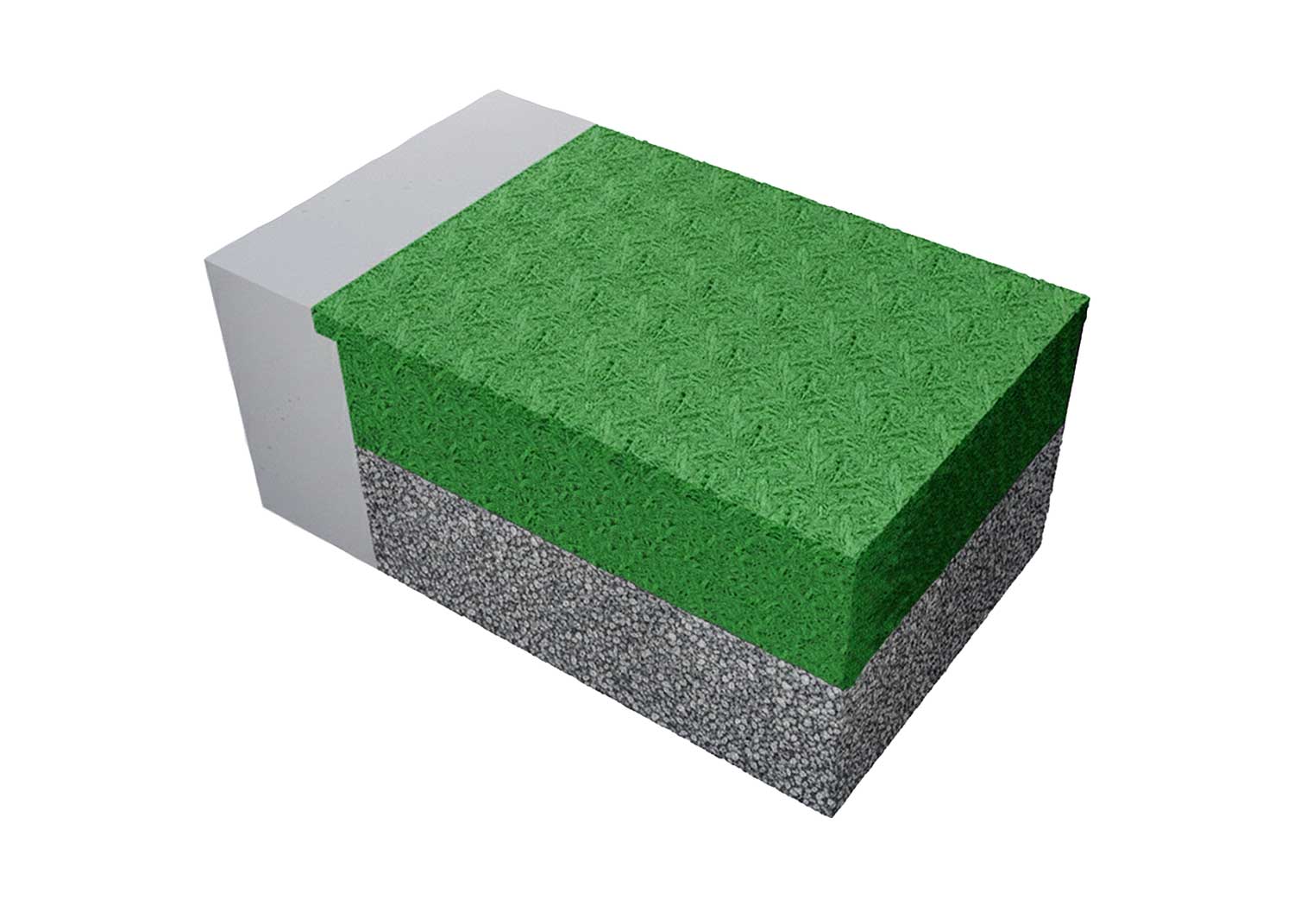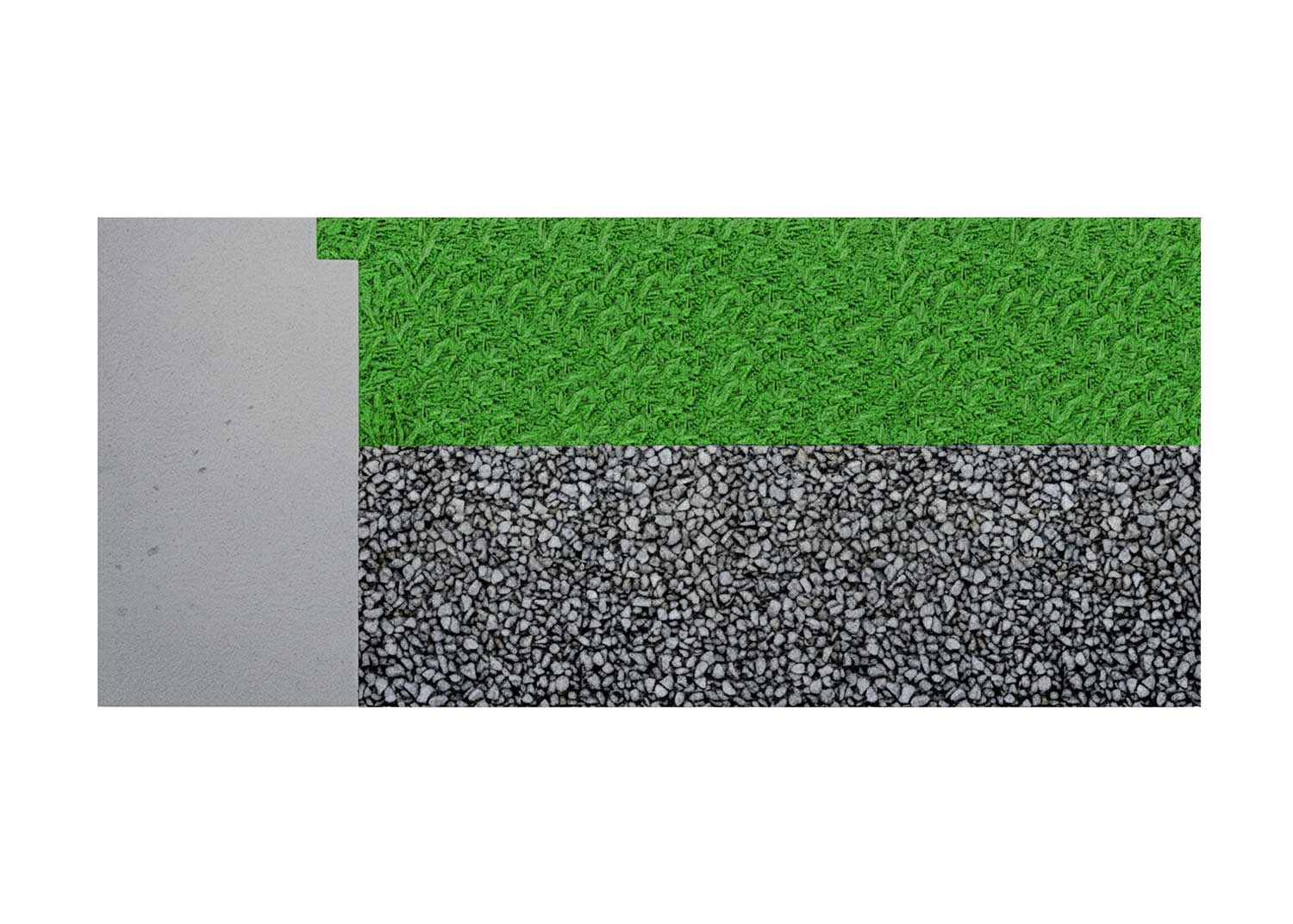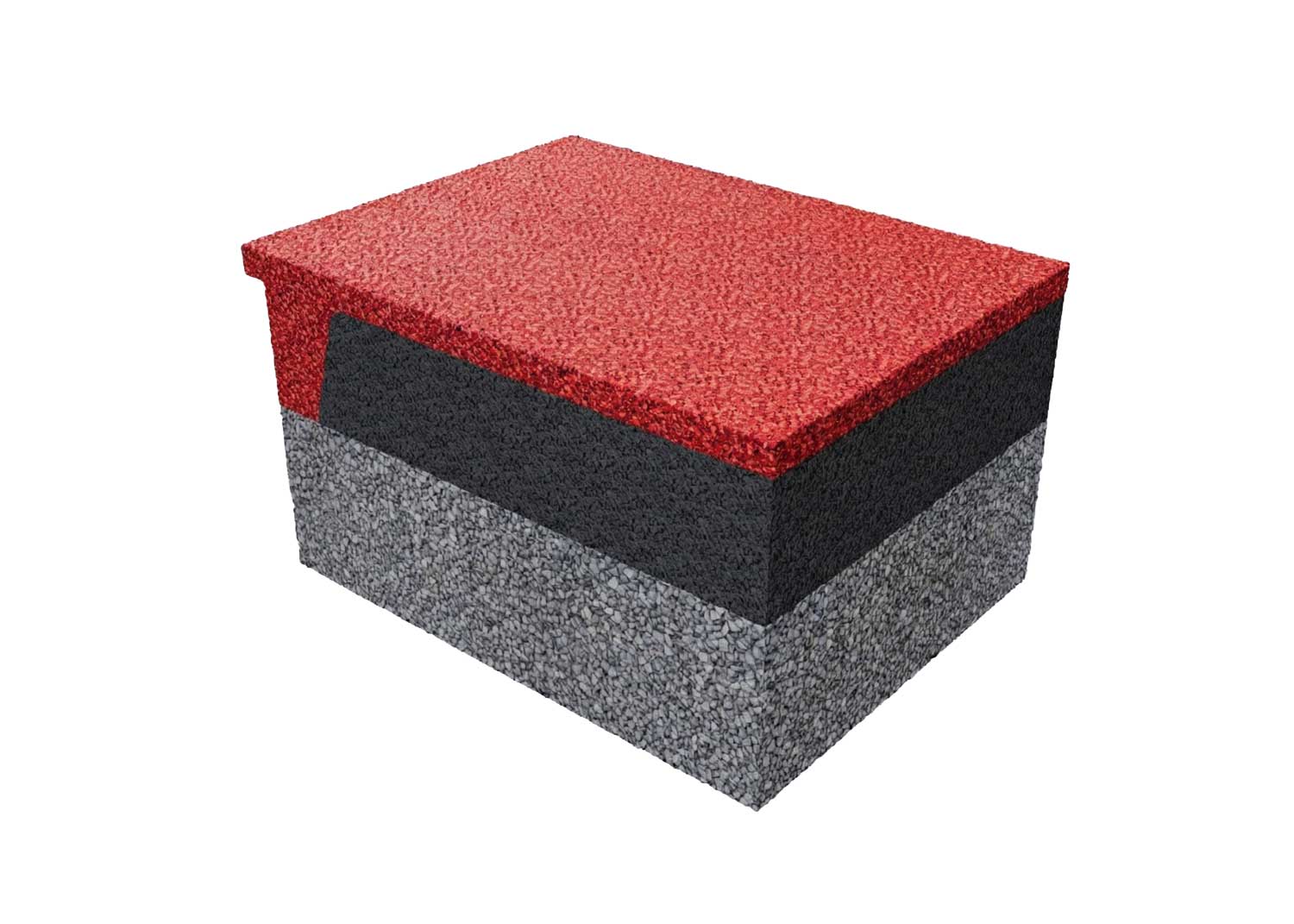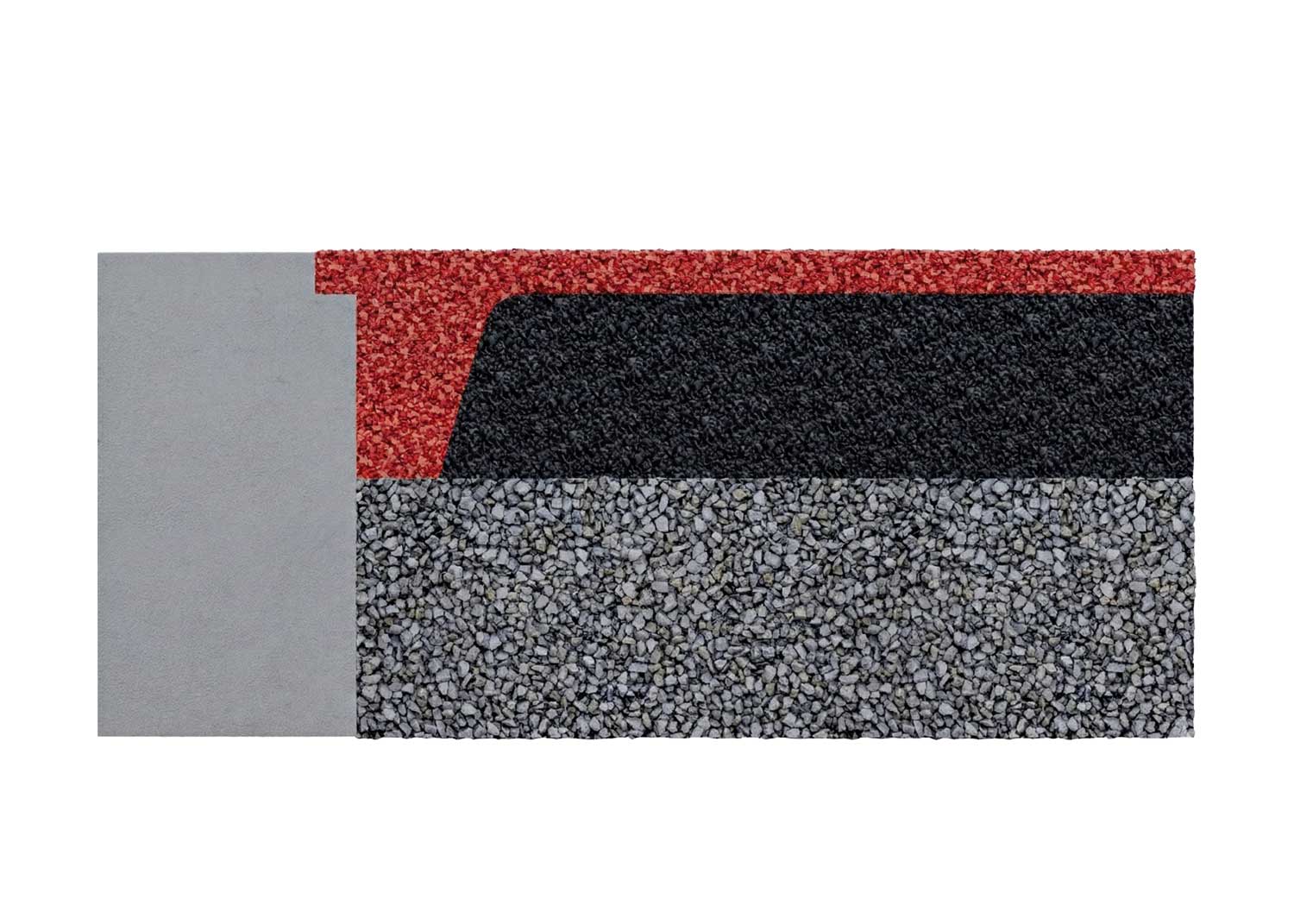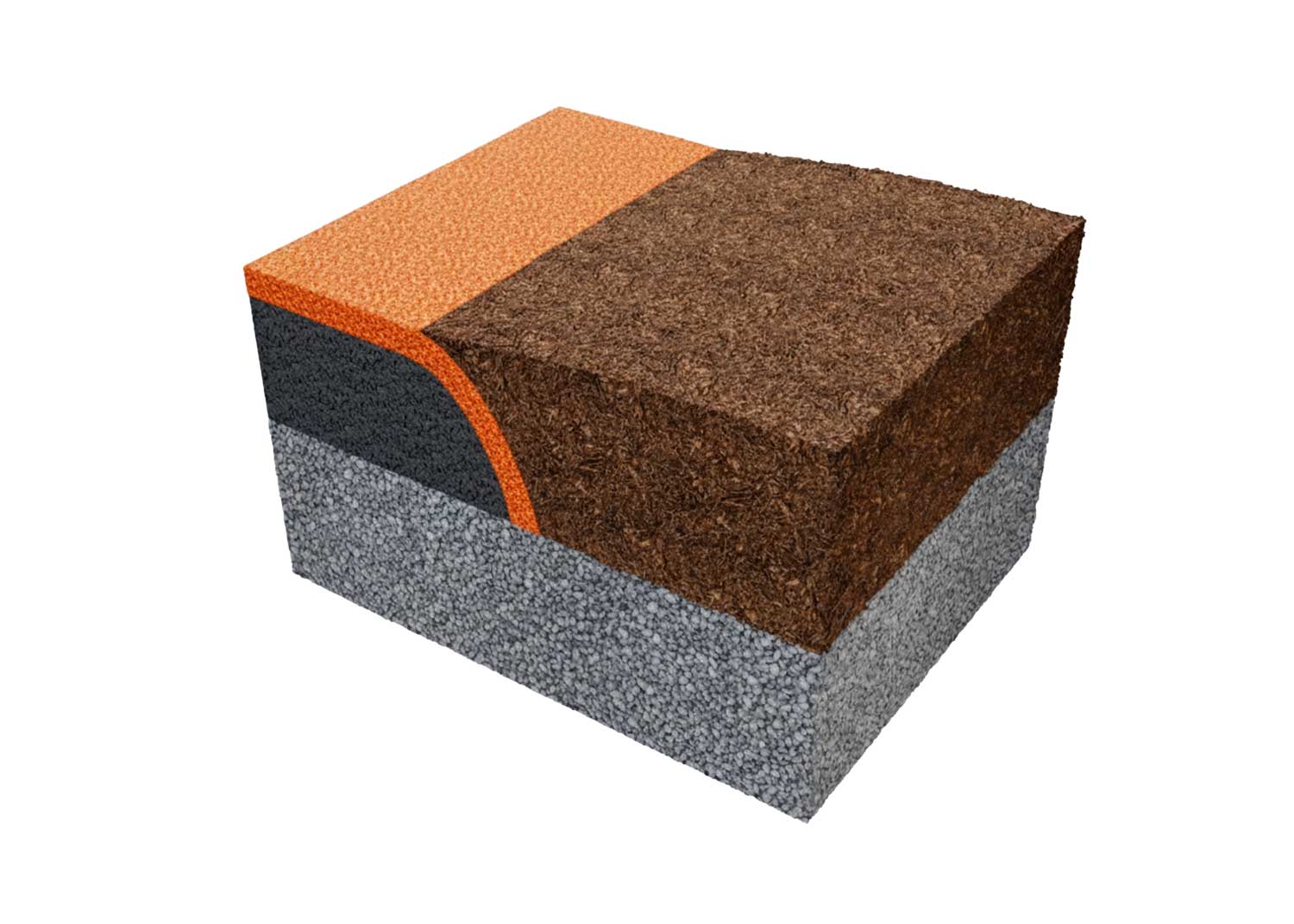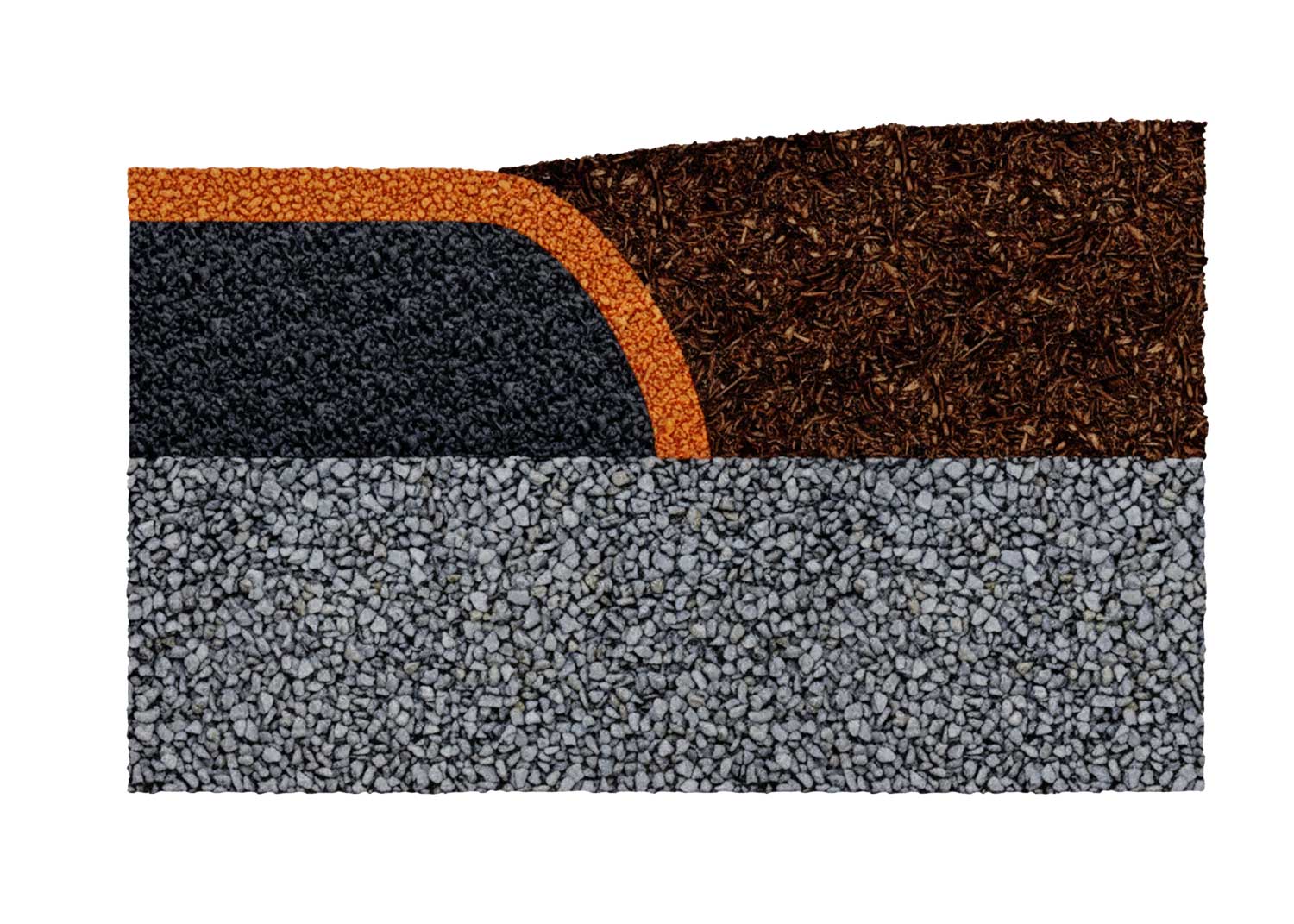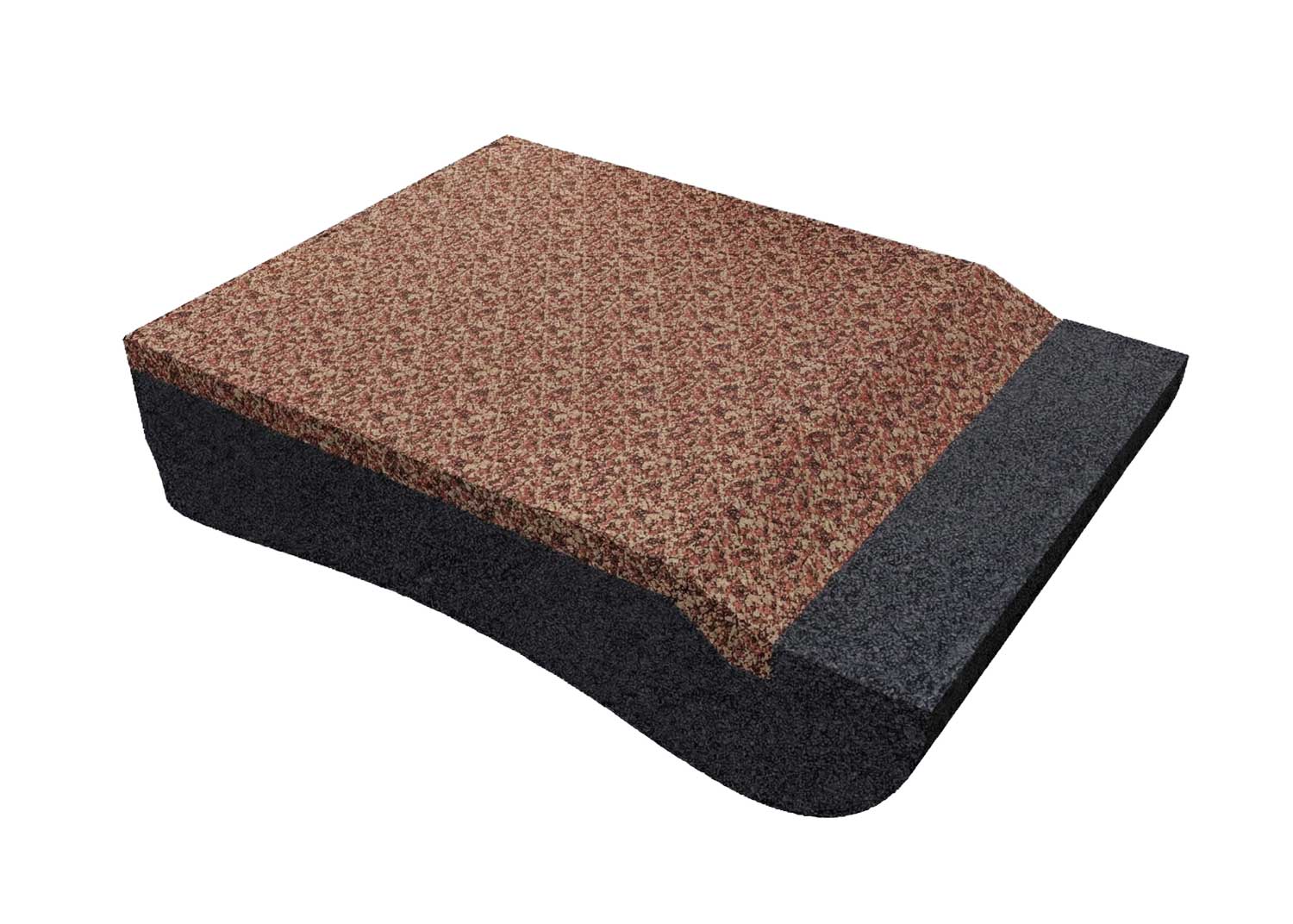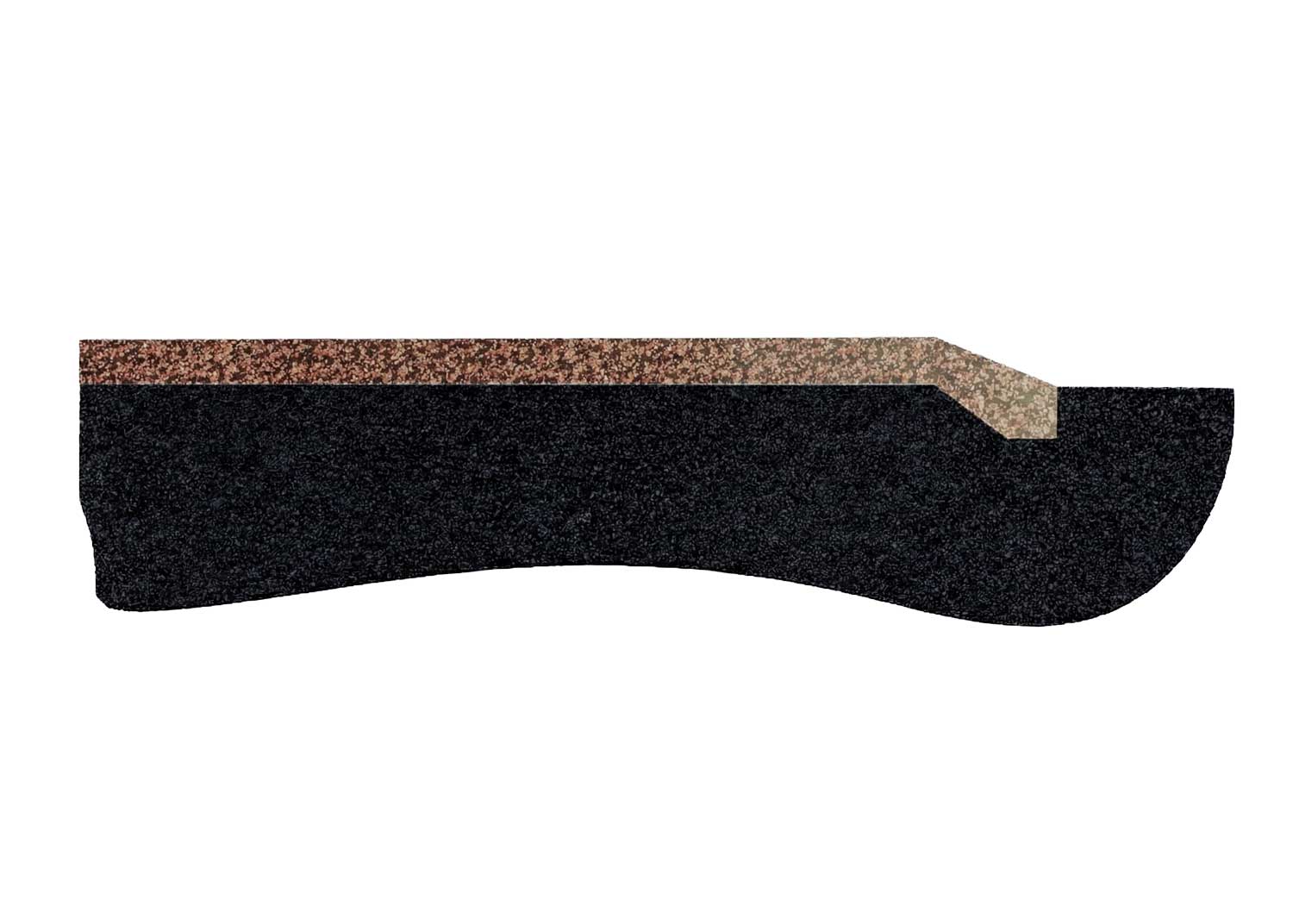

Click each image to view in lightbox.
.svg)
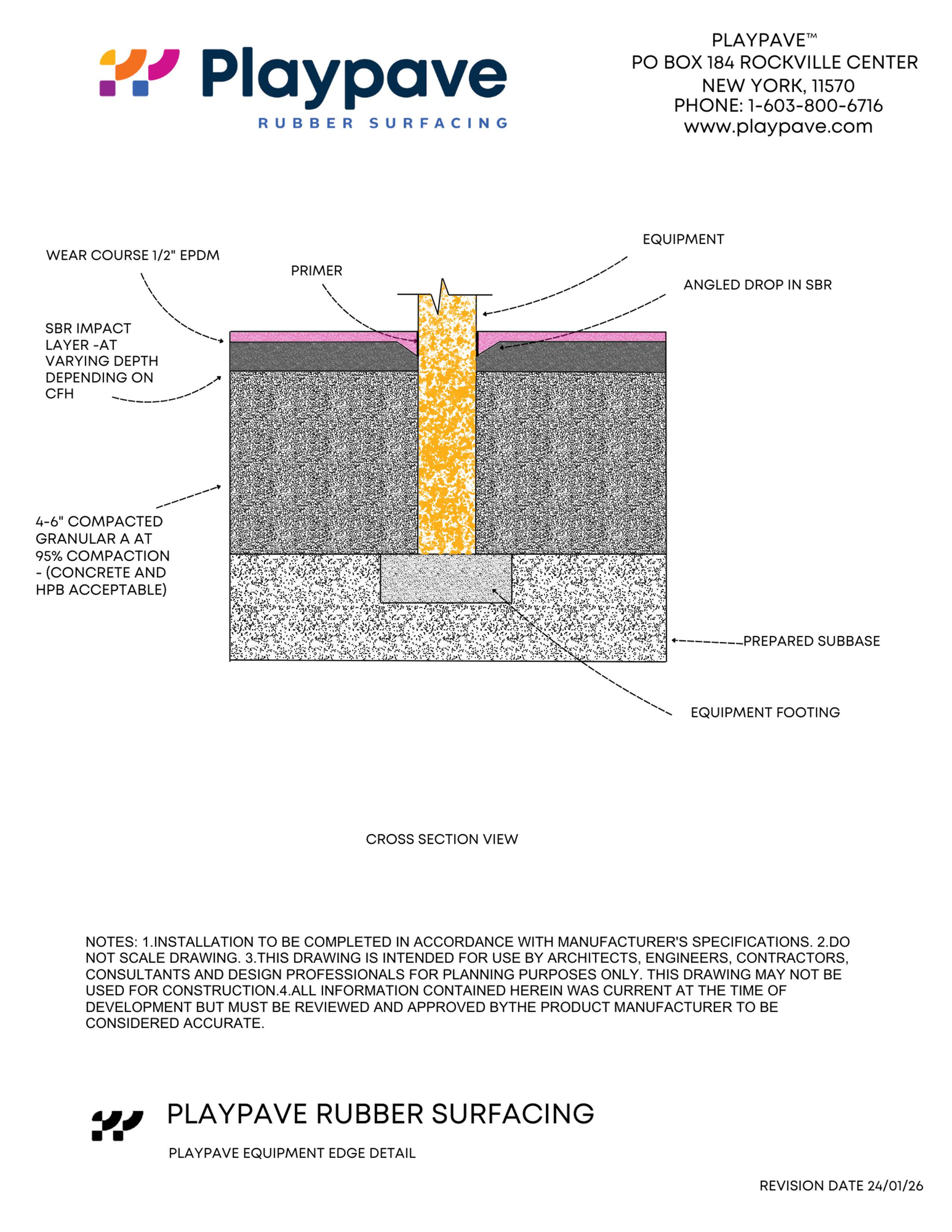
Equipment Edge Detail PDF
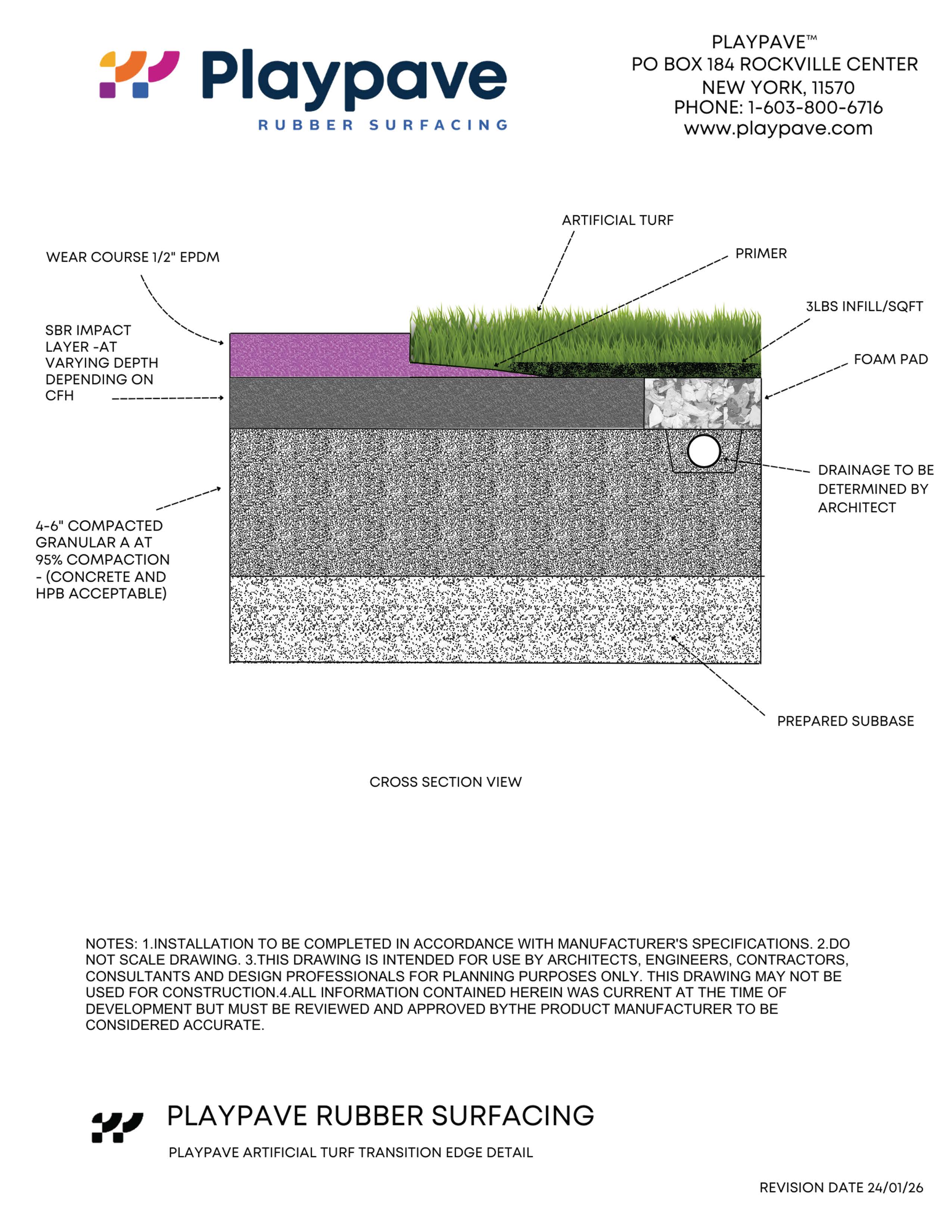
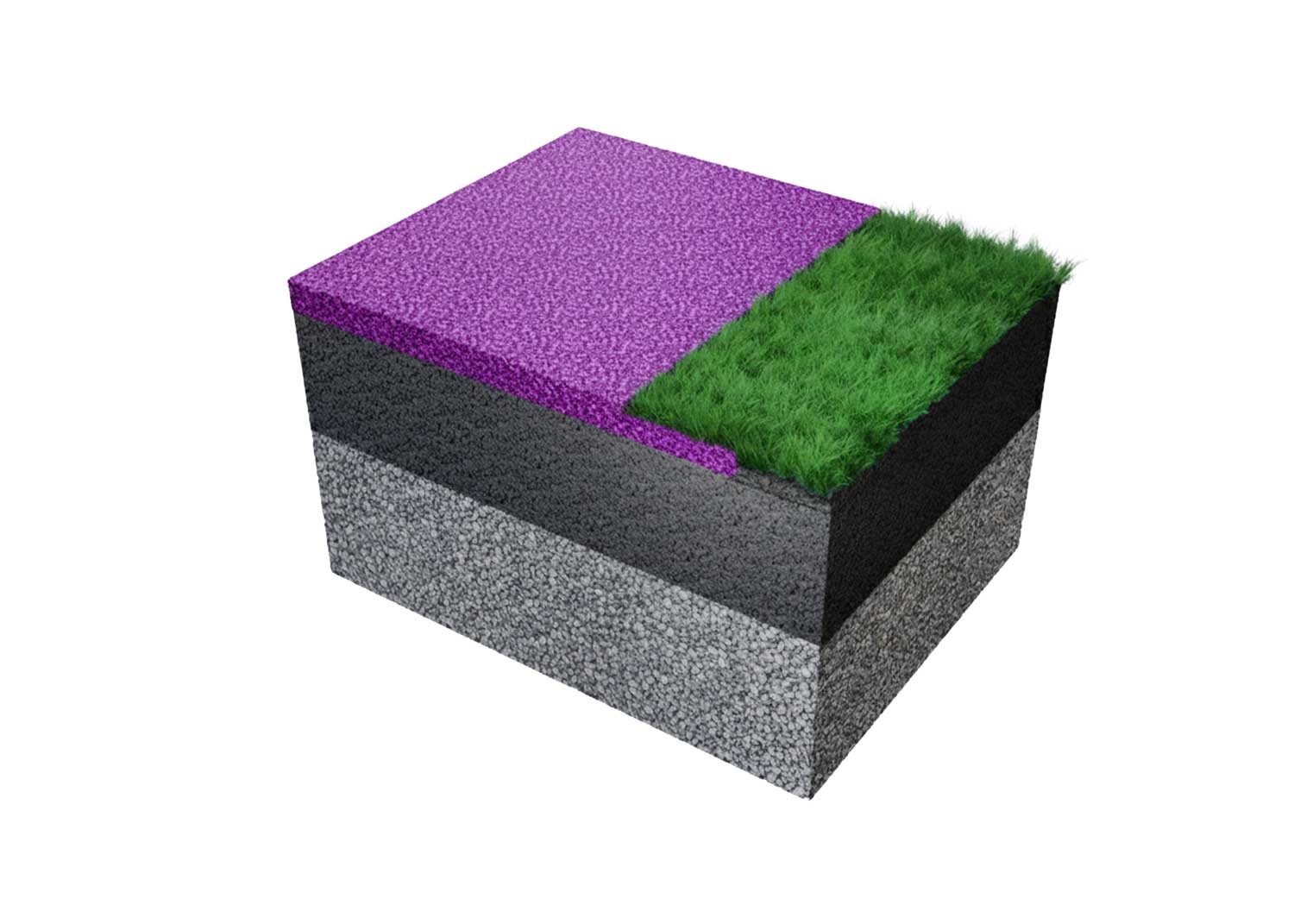
Artificial Turf Transition Edge Detail PDF
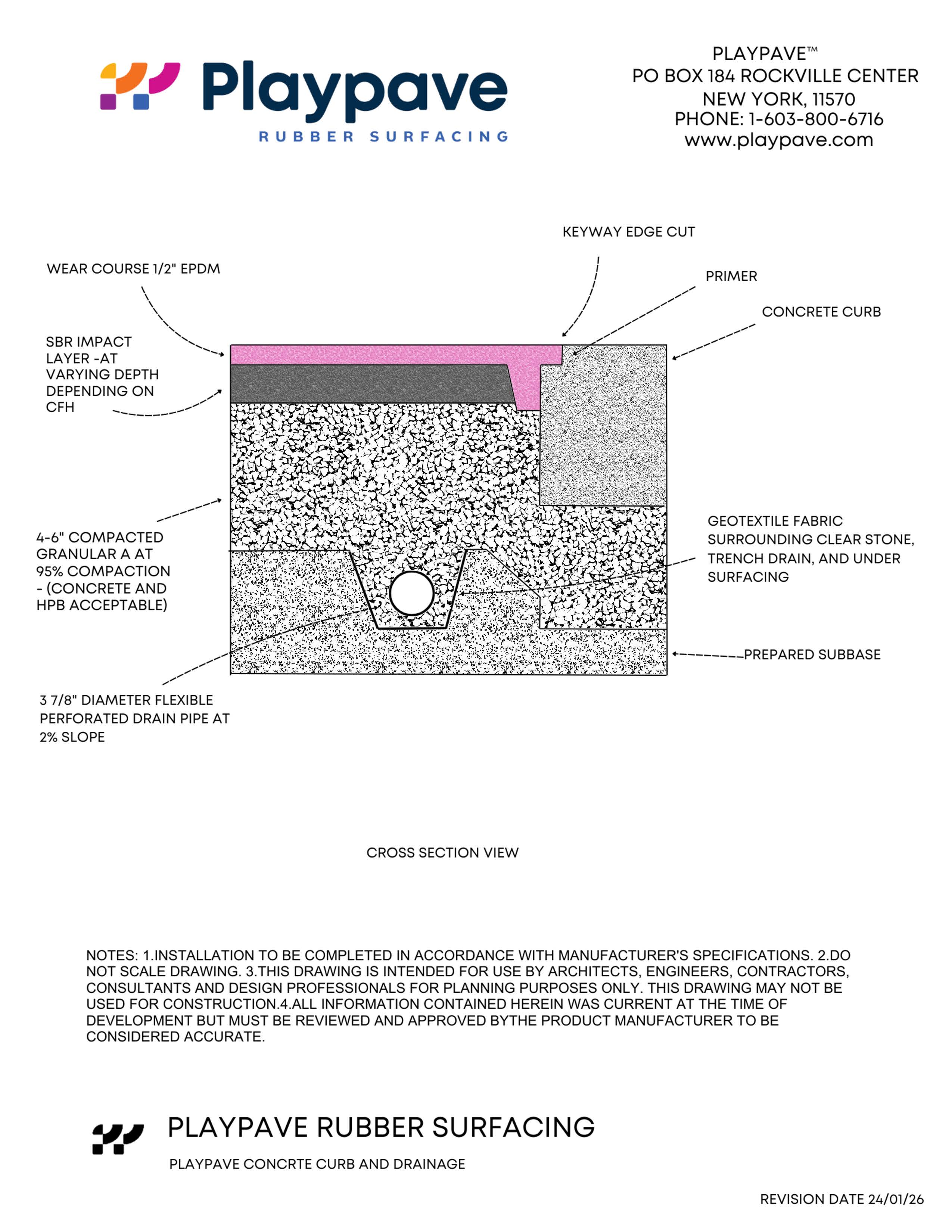
Concrete Curb & Drainage Detail PDF
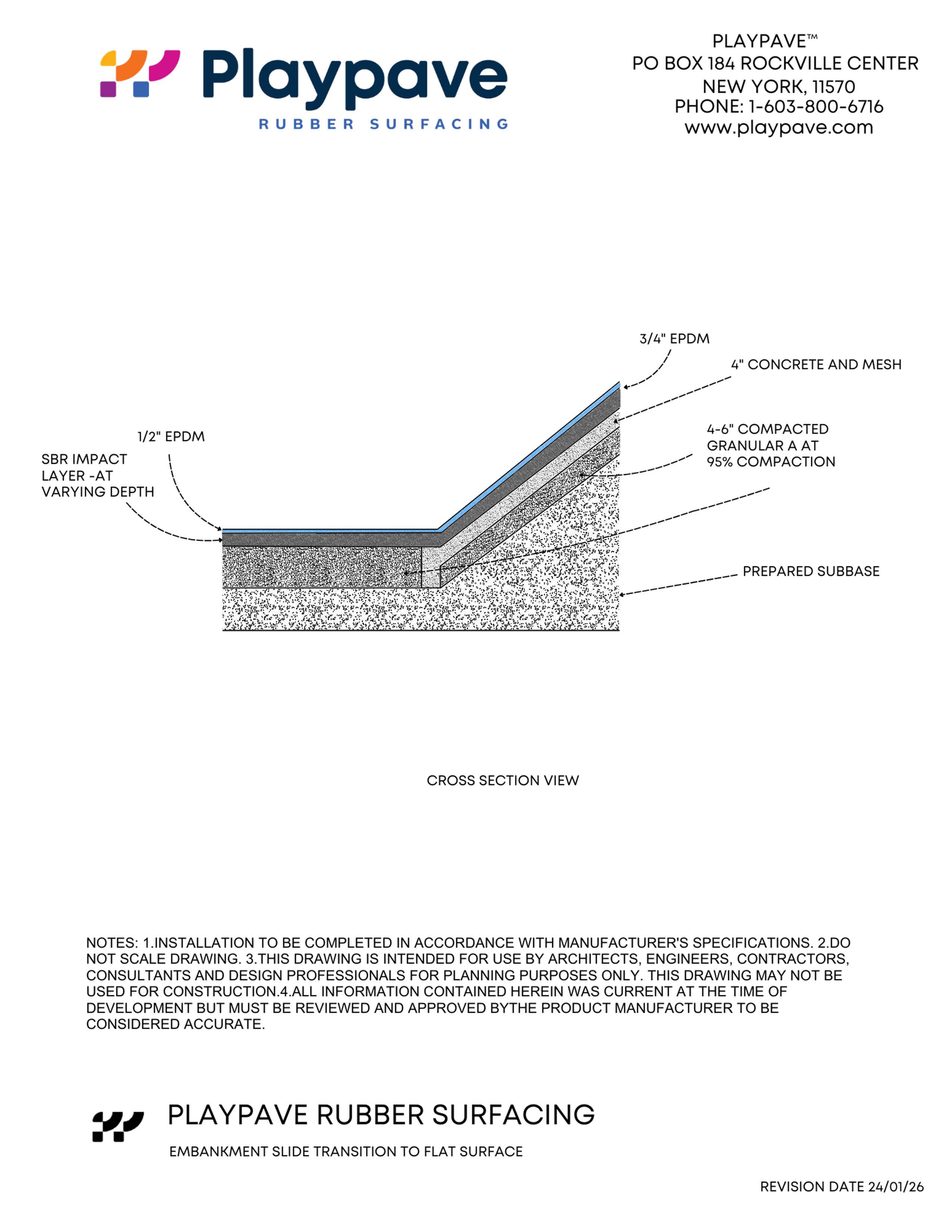
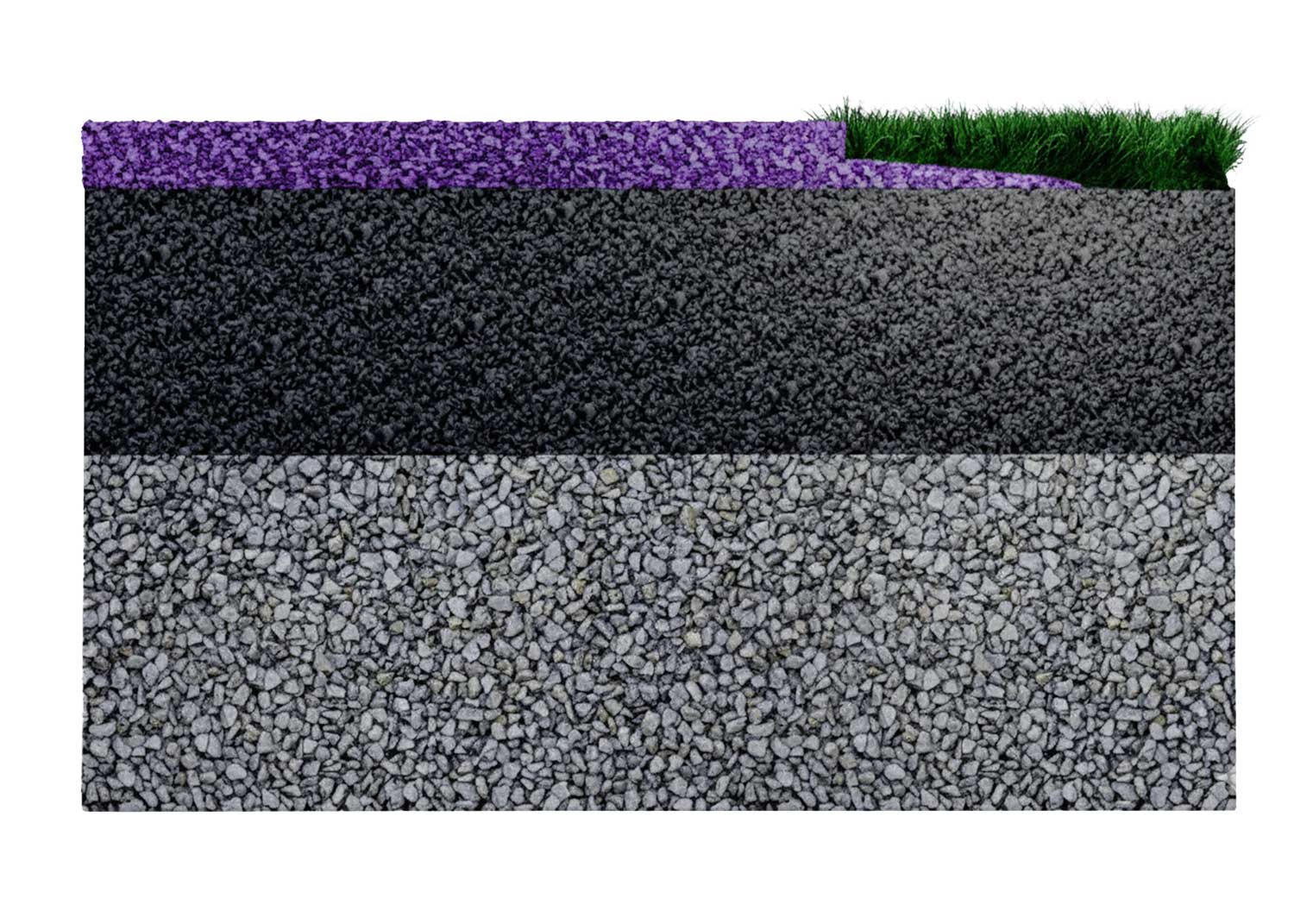
Embankment Side Transition to Flat Surface Detail PDF
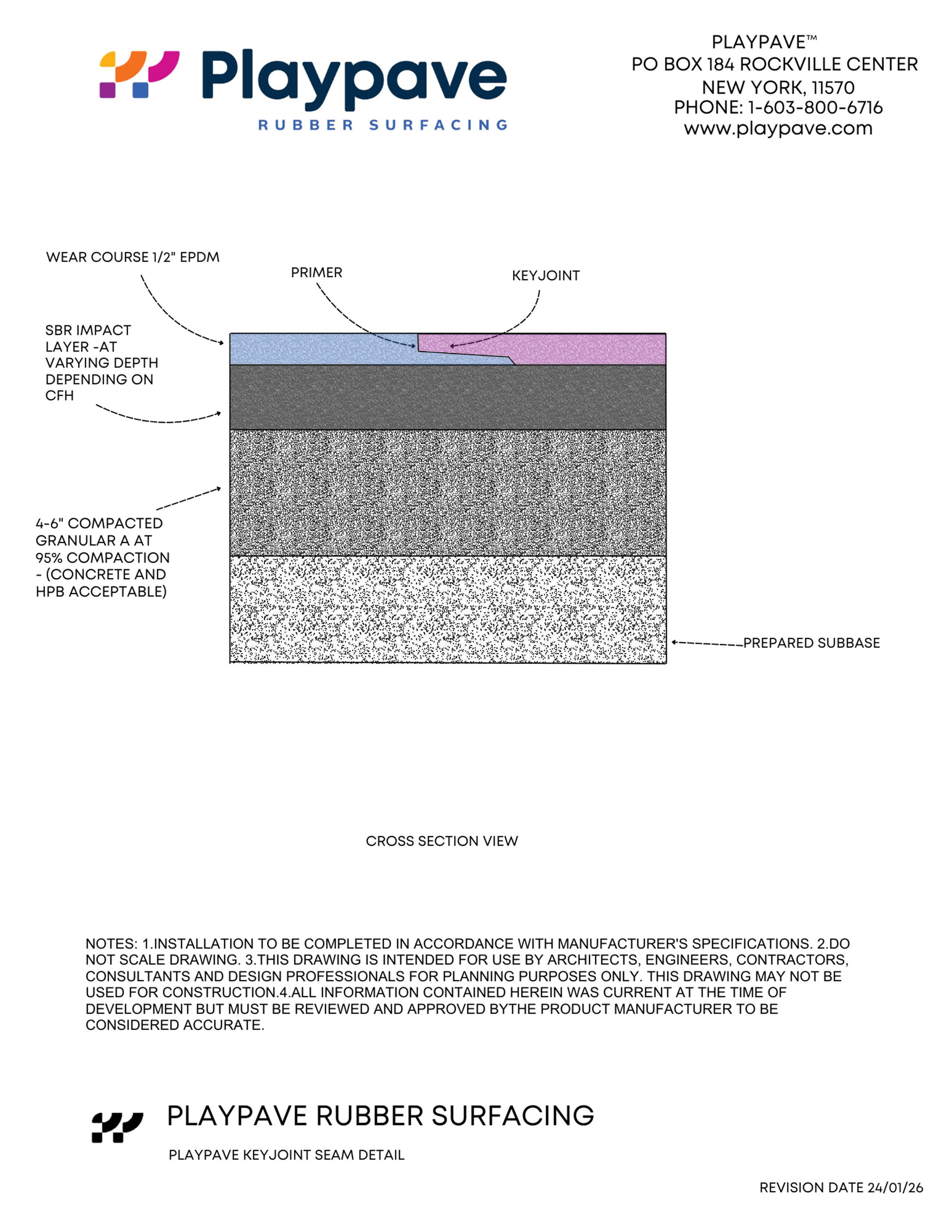
Keyjoint Edge Detail PDF
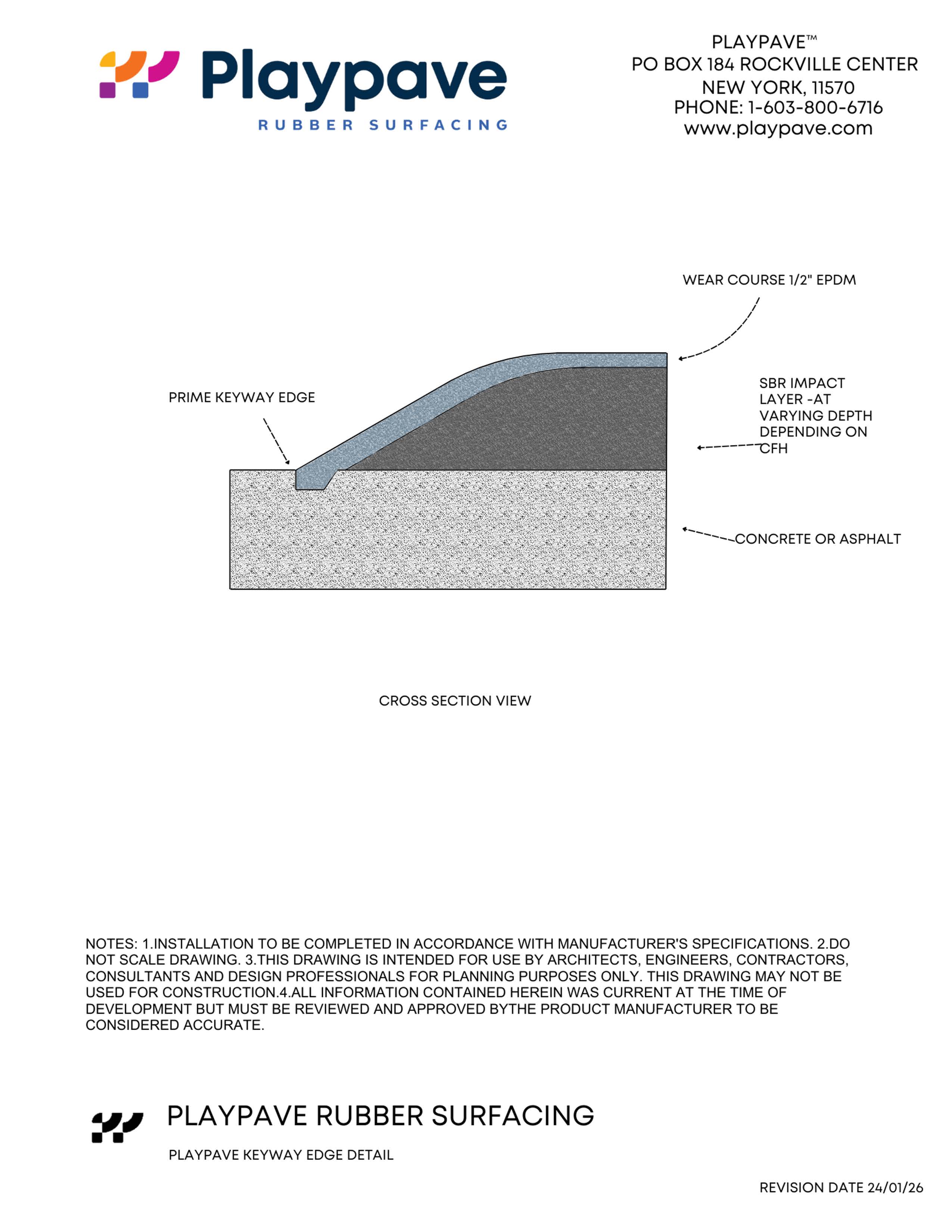
Keyway Edge Detail PDF
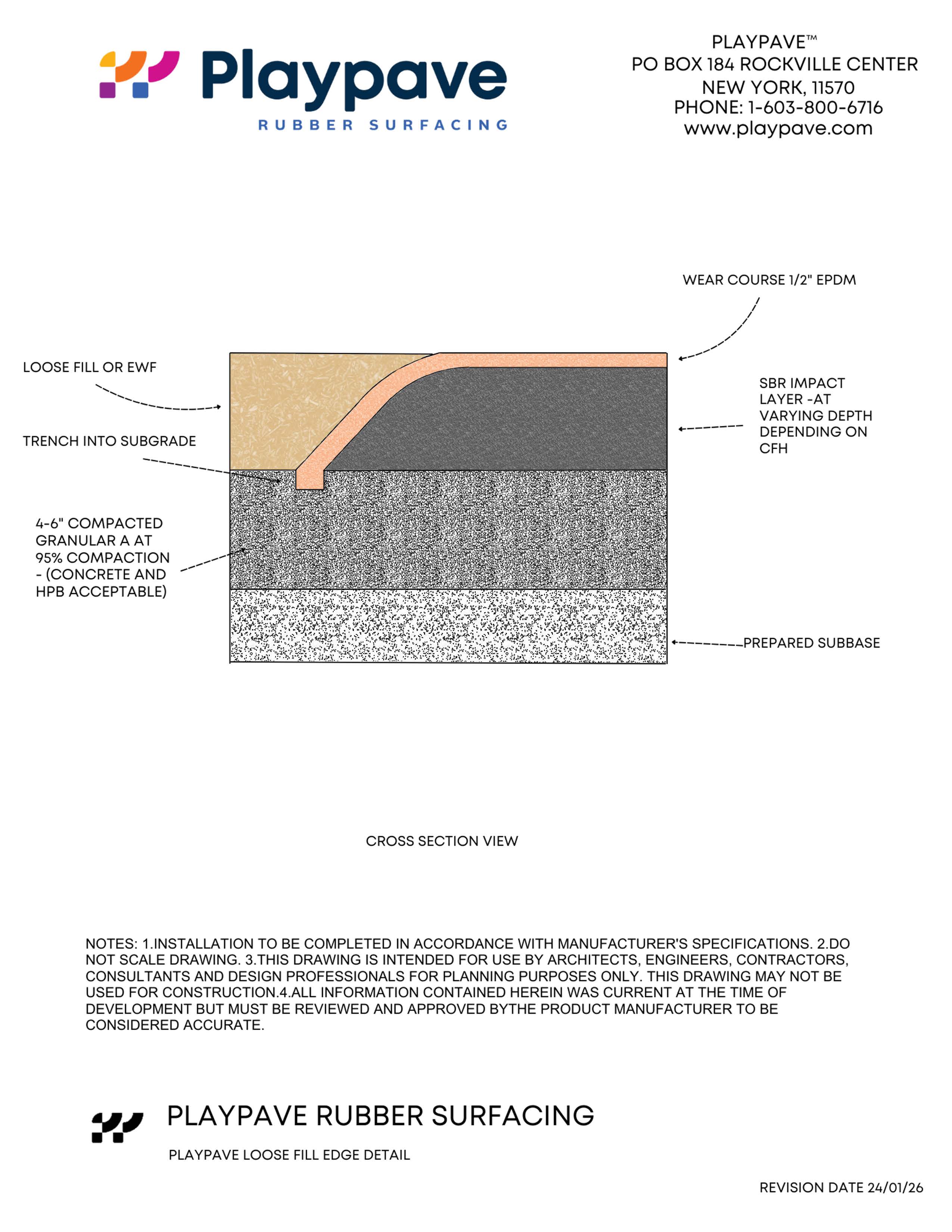
Loose Fill Edge Detail PDF
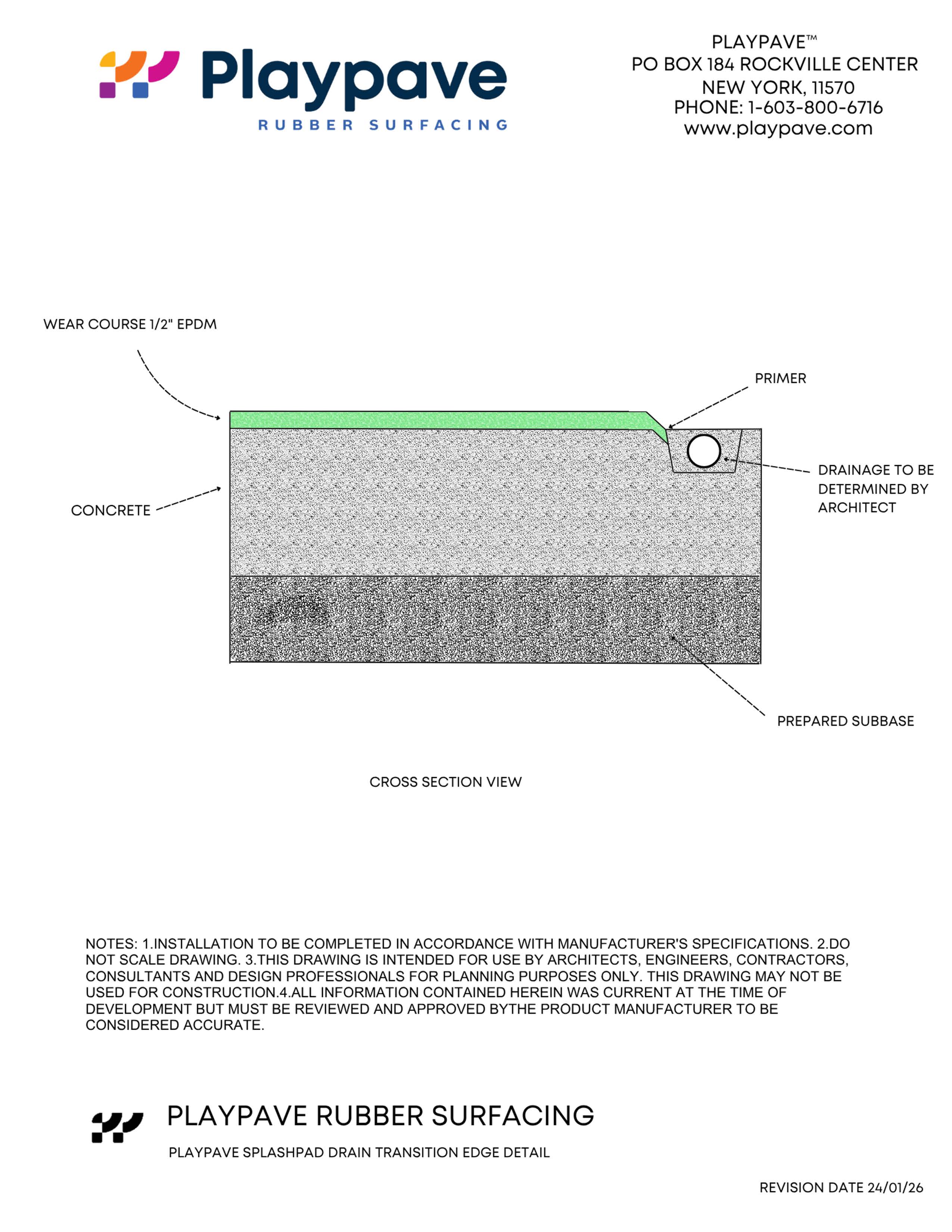
Splash Pad Drain Edge Detail PDF
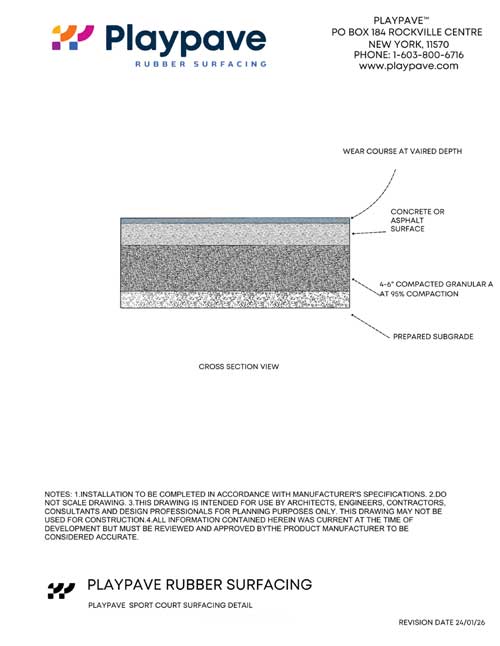
Sport Court Surfacing Cross Section PDF
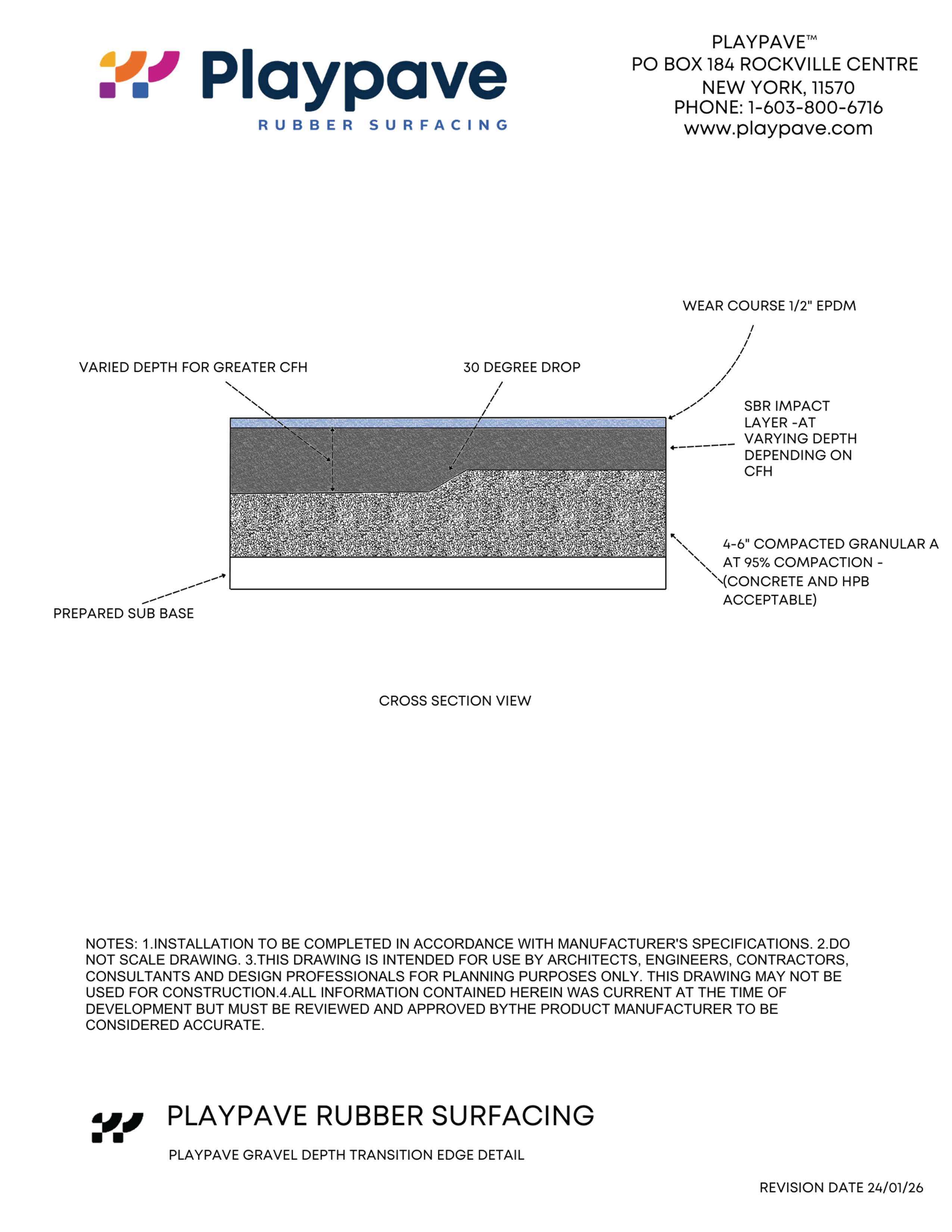
Gravel Depth Transition Cross Section PDF
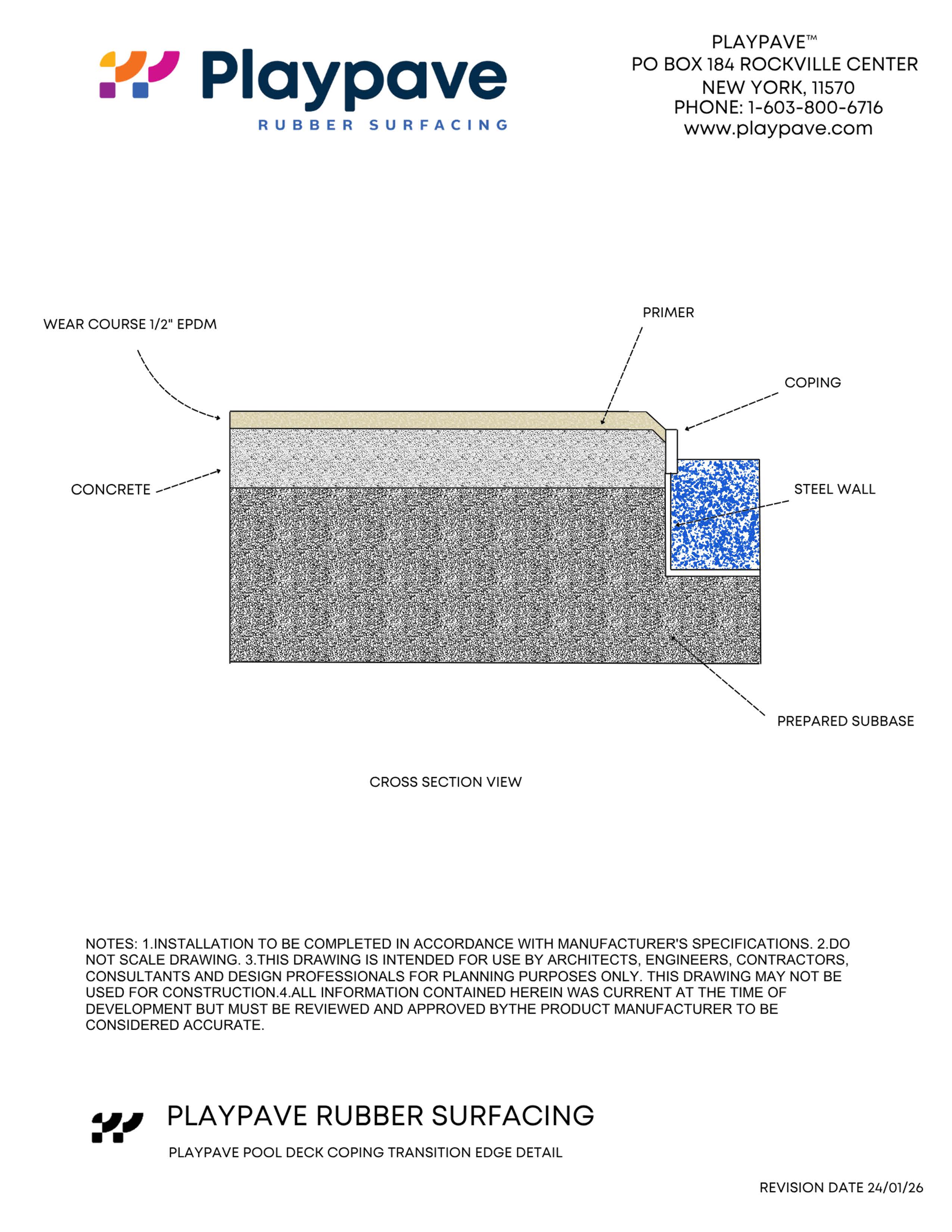
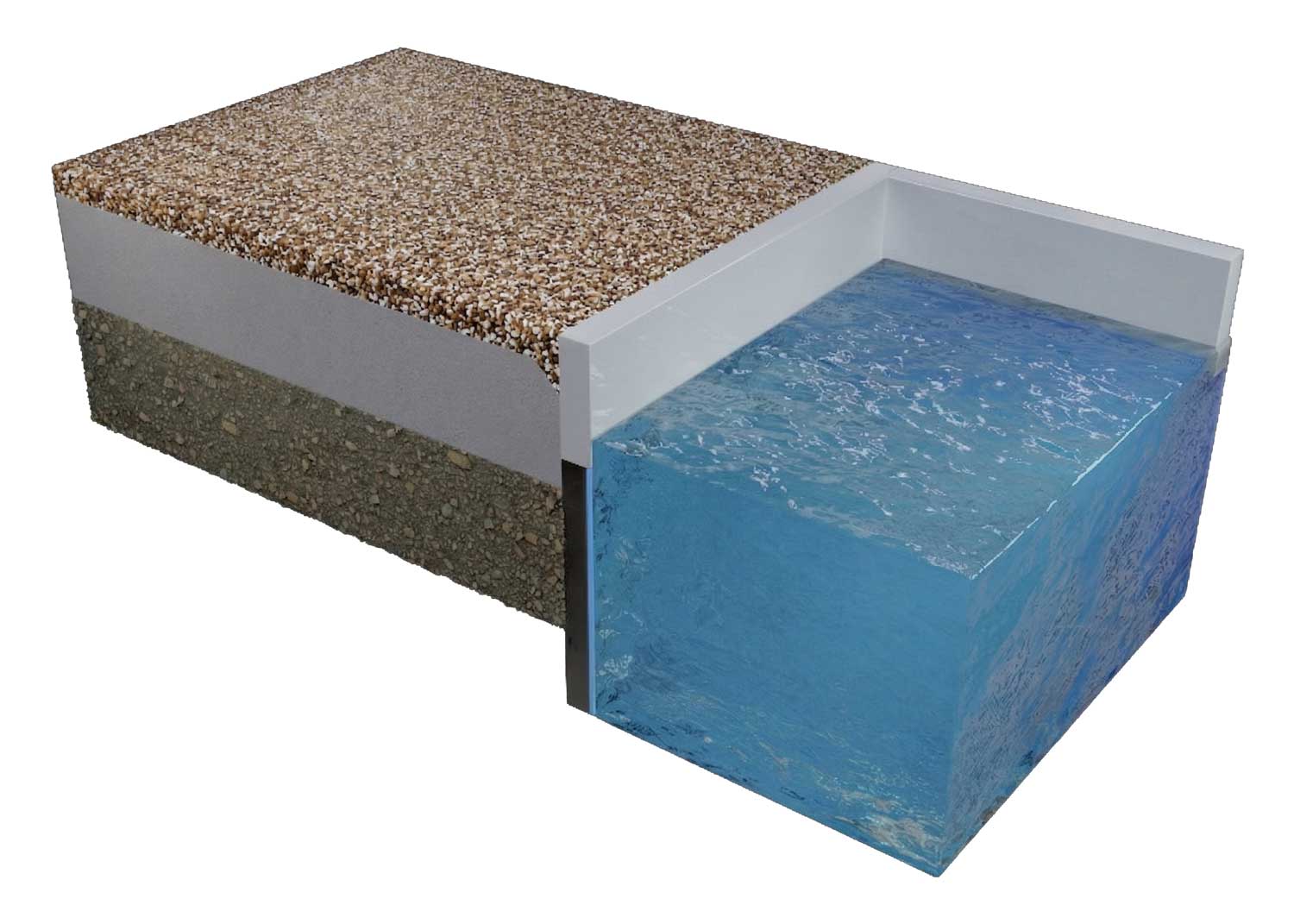
Pool Deck Edge Cross Section PDF

Playpave Playground Rubber Surfacing is a custom-installed system created by mixing rubber granules with a high-performance binder and installing the material directly on-site.
The system consists of two layers:
• A shock-absorbing cushion layer made from recycled rubber that reduces fall impact
• A wear layer of colored EPDM or TPV rubber granules that forms a durable, attractive finished surface
• Playgrounds
• Schools and Daycares
• Splashpads and Pool
• Decks
• Recreation Facilities
• Fitness Areas
• Walking Paths
• Equestrian Facilities
• Theme Parks & Zoos
• Patios & Entrances
Playpave poured-in-place rubber surfacing is engineered for long-term durability, with a typical service life of around 12 years under normal use, and often 15–20 years or more when properly installed and maintained. Its longevity depends on several factors, including the quality of the base preparation and installation, the amount of daily foot traffic, environmental exposure such as UV and freeze-thaw cycles, and routine maintenance practices. Regular cleaning, inspections, and periodic roller-coating to rehydrate the binder can significantly extend the surface’s lifespan. When cared for correctly, poured-in-place rubber surfacing remains one of the longest-lasting playground safety surfacing options available, outperforming loose-fill materials in both durability and long-term performance.
EPDM (Ethylene Propylene Diene Monomer) is a fully cured, synthetic rubber specifically engineered for outdoor exposure. It is manufactured as a homogeneous rubber granule, meaning the color is integrated throughout the entire particle — not coated. EPDM offers the highest level of UV resistance, color stability, elasticity, and weather durability, which is why it’s considered the premium wear-layer material for poured-in-place playground surfacing. Properly manufactured EPDM maintains flexibility and color for many years without becoming brittle.
TPV (Thermoplastic Vulcanizate) is not coated rubber — this is a common misconception. TPV is a thermoplastic elastomer blend where rubber is dynamically vulcanized into a plastic matrix during manufacturing. The color is mixed into the material, similar to EPDM, not painted on. However, TPV behaves differently under long-term UV exposure and heat cycling. While it provides good impact performance and flexibility, it generally has lower long-term UV stability and elasticity retention compared to high-quality EPDM, which can affect aging and appearance over time.
EPDM and SBR serve different roles in poured-in-place rubber surfacing systems. EPDM (Ethylene Propylene Diene Monomer) is a premium synthetic rubber used for the top wear layer because it is color-through, UV stable, weather resistant, and designed to maintain elasticity and appearance over many years of outdoor exposure. SBR (Styrene-Butadiene Rubber) is a recycled tire rubber typically used in the base cushion layer, where its primary function is shock absorption and cost efficiency rather than aesthetics. While SBR provides excellent impact attenuation, it is not intended for long-term surface exposure because it can degrade faster under UV light. Together, the two materials create a balanced system: SBR delivers structural cushioning and fall protection, while EPDM provides durability, color stability, and a long-lasting finished surface.
Maintenance on Playpave rubber surfacing is relatively low compared to loose-fill materials, but routine care is important to maximize lifespan and appearance. Regular maintenance primarily involves keeping the surface clean, inspecting for wear, and performing preventative rejuvenation over time.
In normal use, the surface should be swept or blown clean to remove dirt, leaves, and debris, and periodically washed with water to prevent buildup of contaminants. Routine inspections should check for high-traffic wear areas, edge separation, or small cracks so repairs can be completed early before they spread. Every few years — typically 3–5 years depending on UV exposure and traffic — a roller coat or surface rejuvenation treatment can be applied to rehydrate the binder, restore flexibility, and add UV protection. With consistent cleaning, inspections, and occasional recoating, Playpave surfacing maintains its safety performance and appearance for many years while requiring far less upkeep than mulch, sand, or loose rubber systems.
For routine care, remove loose debris with a leaf blower, soft broom, or plastic rake. The surface can be rinsed with a garden hose or pressure washer to flush out dirt and dust. Pressure washing is safe when done correctly — use up to 2500 PSI with a 25-degree nozzle, keeping the wand moving and held at a reasonable distance to avoid concentrating force in one spot. For heavier soil, use a mild soap or neutral cleaner diluted in water and scrub gently with a soft bristle brush. Avoid harsh solvents, acids, or petroleum-based cleaners, as these can damage the binder. If algae or mildew develops in shaded areas, a diluted, rubber-safe cleaner may be used and rinsed thoroughly.
Regular cleaning — typically a few times per season depending on environment and usage — helps maintain permeability, appearance, and long-term performance.
Aromatic and aliphatic polyurethane binders differ primarily in their reaction to UV exposure and long-term appearance. Aromatic polyurethane binders, typically MDI-based, are strong, cost-effective, and provide excellent structural bonding in rubber surfacing systems, but they are UV sensitive and will naturally amber or yellow over time when exposed to sunlight. This change is mostly cosmetic and does not significantly affect impact performance, but it can alter the appearance of lighter colors. Aliphatic polyurethane binders, by contrast, are engineered for UV stability and resist yellowing, allowing the surface to maintain clear, vibrant color for many years. They offer superior weathering performance and aesthetic longevity but come at a higher material cost. In practice, both binders perform well structurally; the choice typically depends on whether long-term color retention or budget is the higher priority.
Ambering (sometimes called blooming) in EPDM surfacing is a cosmetic discoloration that occurs when an aromatic polyurethane binder reacts to ultraviolet (UV) exposure. Aromatic binders naturally oxidize in sunlight, causing the clear binder film surrounding the EPDM granules to develop a yellow or amber tint. On darker colors this effect is often unnoticed, but on light EPDM colors — blues, grays, tans, or pastels — the change can appear as a yellow cast or hazy surface film.
Importantly, ambering is not a structural failure and does not reduce impact attenuation or safety performance. It is a visual aging characteristic of aromatic chemistry, not a defect in the rubber itself. The effect stabilizes over time and is largely aesthetic. Installations that require long-term color clarity typically use aliphatic polyurethane binders, which are UV stable and resist this discoloration.
For best performance, Playpave poured-in-place rubber surfacing should be installed over a stable, well-drained, hard base that prevents movement and moisture trapping. Acceptable bases include cast-in-place concrete, asphalt, and properly prepared engineered aggregate bases designed specifically for PIP systems. Concrete provides the most stable and durable substrate and is preferred for long-term installations. Asphalt is also acceptable when fully cured and structurally sound. In some applications, a compacted aggregate base with a binding system or geotextile stabilization may be used, provided it is engineered to prevent shifting and meets compaction and drainage requirements.
The base must be smooth, clean, and free of dust, oils, standing water, or loose material before installation. Any cracks, spalling, or unstable areas should be repaired in advance. A properly prepared base is critical to prevent delamination, bubbling, or premature wear, and is one of the biggest factors in the long-term performance of the surfacing system.
Gmax and HIC are the two primary measurements used to evaluate how well a playground surface protects a child during a fall. They come from impact testing standards such as ASTM F1292 and are critical because they directly relate to head injury risk.
Gmax measures the peak deceleration experienced during impact — essentially how hard the surface “hits back.” It reflects the maximum force transferred to the body at the moment of contact. A lower Gmax value means the surface absorbs more energy and reduces the severity of impact.
HIC (Head Injury Criterion) measures the duration and intensity of the impact impulse, not just the peak force. It is a more complete indicator of potential head injury because it accounts for how long the force acts on the head. Even if a surface has a moderate peak force, a long-duration impact can still be dangerous — HIC captures that risk.
These values are important because safety standards set maximum allowable limits (typically ≤200 Gmax and ≤1000 HIC) to reduce the likelihood of serious head injury from falls. Playground surfacing is engineered and tested to stay below these thresholds at specific fall heights. In simple terms: the lower the numbers, the safer the surface, and compliant Gmax/HIC ratings confirm that the surfacing is doing its job — absorbing energy and protecting children.
Yes — like all outdoor materials, Playpave rubber surfacing will experience some gradual color change over time, but the amount depends on the materials used and environmental exposure. Surfaces that use high-quality EPDM wear layers and UV-stable binders are specifically engineered to resist fading and maintain color much longer than standard rubber products. In normal conditions, any change is slow and even, and does not affect safety performance, elasticity, or impact protection.
Sun exposure, climate, and traffic levels influence how quickly fading occurs. Darker colors tend to show less visible change, while lighter or pastel colors may reveal aging sooner. Periodic cleaning and optional rejuvenation or roll-coating every few years can refresh appearance and extend color life. Importantly, fading is cosmetic only — it does not reduce shock absorption or structural integrity of the surface.
Playpave is ADA compliant because it creates a smooth, continuous, slip-resistant surface that allows safe and independent access for wheelchairs, mobility aids, and pedestrians. Unlike loose materials such as mulch, sand, or gravel that shift and create ruts or soft spots, poured-in-place rubber forms a stable path of travel that meets accessibility guidelines for firmness, stability, and slip resistance. The seamless installation eliminates trip hazards and transitions, while customizable thickness allows proper ramping and edge integration with surrounding sidewalks and equipment. When installed over a properly prepared base and within ADA slope and layout requirements, Playpave supports inclusive playground design by ensuring children and caregivers of all abilities can move freely throughout the play area.
Ice can form on Playpave just like it can on any outdoor surface, but it typically does not bond aggressively to the rubber the way it does to porous concrete or rough asphalt. The rubber surface is slightly flexible and less absorbent, which makes ice easier to break up and remove.
In freezing conditions, Playpave remains safer than many hard surfaces because it retains a bit of elasticity and texture, helping with traction. Snow and ice can be removed using plastic shovels, rubber-edged plows, or de-icing products that are safe for rubber (avoid harsh salts or petroleum-based chemicals). Proper drainage and routine winter maintenance will prevent buildup and keep the surface performing well.
Every time it rains, water has to go somewhere. On a traditional hardscape — asphalt, concrete, standard pavers — that water has nowhere to go but sideways, running off into storm drains until the system backs up. As storms get heavier and more frequent, that runoff is becoming a real problem for municipalities, schools, and property owners alike: more flooding, more erosion, and more pollutants washed straight into local waterways.
Playpave takes a different approach. Our poured-in-place (PIP) rubber surfacing isn't just decorative or impact-absorbing — it's engineered to be porous from top to bottom, so rainwater passes directly through the surface instead of running off it.
Installation time for Playpave poured-in-place surfacing depends on area size, thickness, site access, and weather, but most standard playground projects are completed in 1–3 days. Smaller areas can often be installed in a single day, while larger or multi-color designs may require additional time for staging and curing between sections.
After installation, the surface typically needs 24–48 hours of cure time before it can handle foot traffic, depending on temperature and humidity. Warm, dry conditions speed curing; cool or damp weather can extend it. Proper scheduling ensures the binder fully sets so the surface reaches its designed strength and safety performance.
Playpave poured-in-place rubber surfacing is not a DIY product and should only be installed by trained professionals with proven experience in PIP systems. The binder is a moisture-cured polyurethane, which means installation conditions such as temperature, humidity, base moisture, mix ratios, working time, and site environment directly affect how the material reacts and cures. Small variations can change flow, set time, bond strength, and finished appearance. Professional installers understand how to adjust techniques in real time to account for these variables, ensuring proper adhesion, thickness control, drainage, and long-term performance. Because safety surfacing must meet strict impact standards, expert installation is essential to achieve consistent quality and reliable protection.
Fill out the estimate form with as many details as possible and we will get back to you with an initial quote within 24-48 hours.
Soft Landings for Big Adventures


Playpave LLC
PO Box 184
Rockville Centre, NY 11571
Playground surfacing
Commercial splash pads and water play areas
Sports surfacing
Surfacing for fitness areas and exercise tracks
3D Rubber designs for play areas
Horse stall flooring and barn mats
Resort and hotel pool decks
Rubber surfacing for military and government contracts






© 2026 Playpave LLC, All Rights Reserved.