

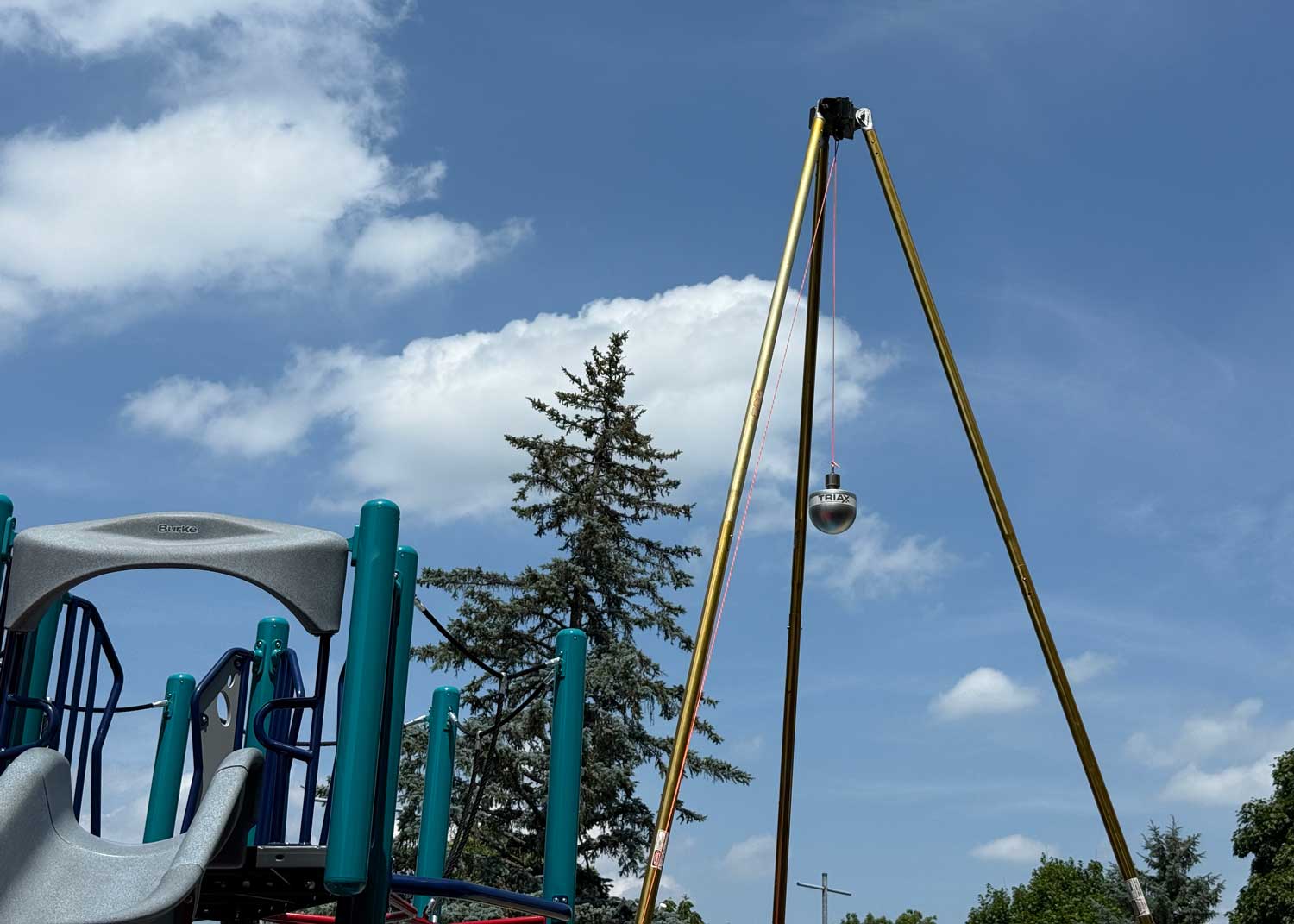
When it comes to playground safety, one of the most important tests is the playground surface drop test, often referred to as the HIC (Head Injury Criterion) test or GMAX test. These tests determine whether the protective surfacing under and around play equipment can effectively reduce the risk of serious head injuries in the event of a fall.
In simple terms, this is the gold standard for measuring whether the surface beneath a play structure will protect children from debilitating head injuries—or worse—should they fall.
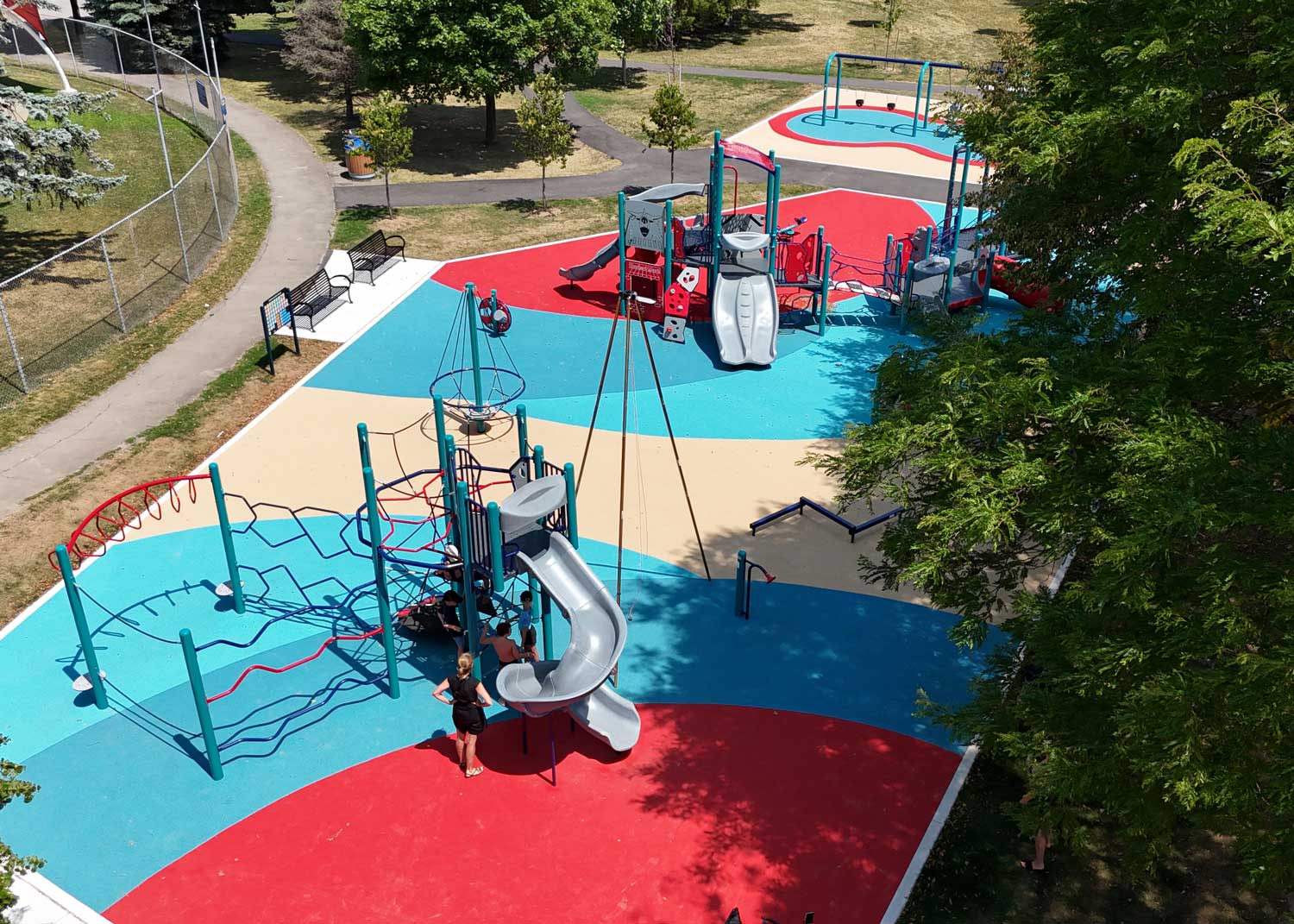
Why These Tests Matter
Falls are the leading cause of playground-related emergency room visits. In fact, around 70% of playground injuries are caused by falls. That’s why choosing the right surface, installing it correctly, and maintaining it at the right depth across all use zones is crucial.
Equally important is testing the surfacing:
- At installation (before the playground opens).
- Regularly afterward, since surfaces deteriorate over time due to weather, wear, and other factors.
Understanding GMAX and HIC
The drop test produces two key measurements:
- GMAX: This reading measures the maximum impact force (acceleration) when a headform strikes the surface. Borrowed from automotive safety testing, the limit is 200 Gs. Anything above that indicates unsafe impact levels.
- HIC (Head Injury Criterion): A more complex measurement, HIC considers not only impact severity but also how long the headform experiences that force. The result must not exceed 1000. This number represents the probability of severe head injury occurring.
Together, these readings provide a clear picture of how well a surface can protect against head trauma.
The Testing Process
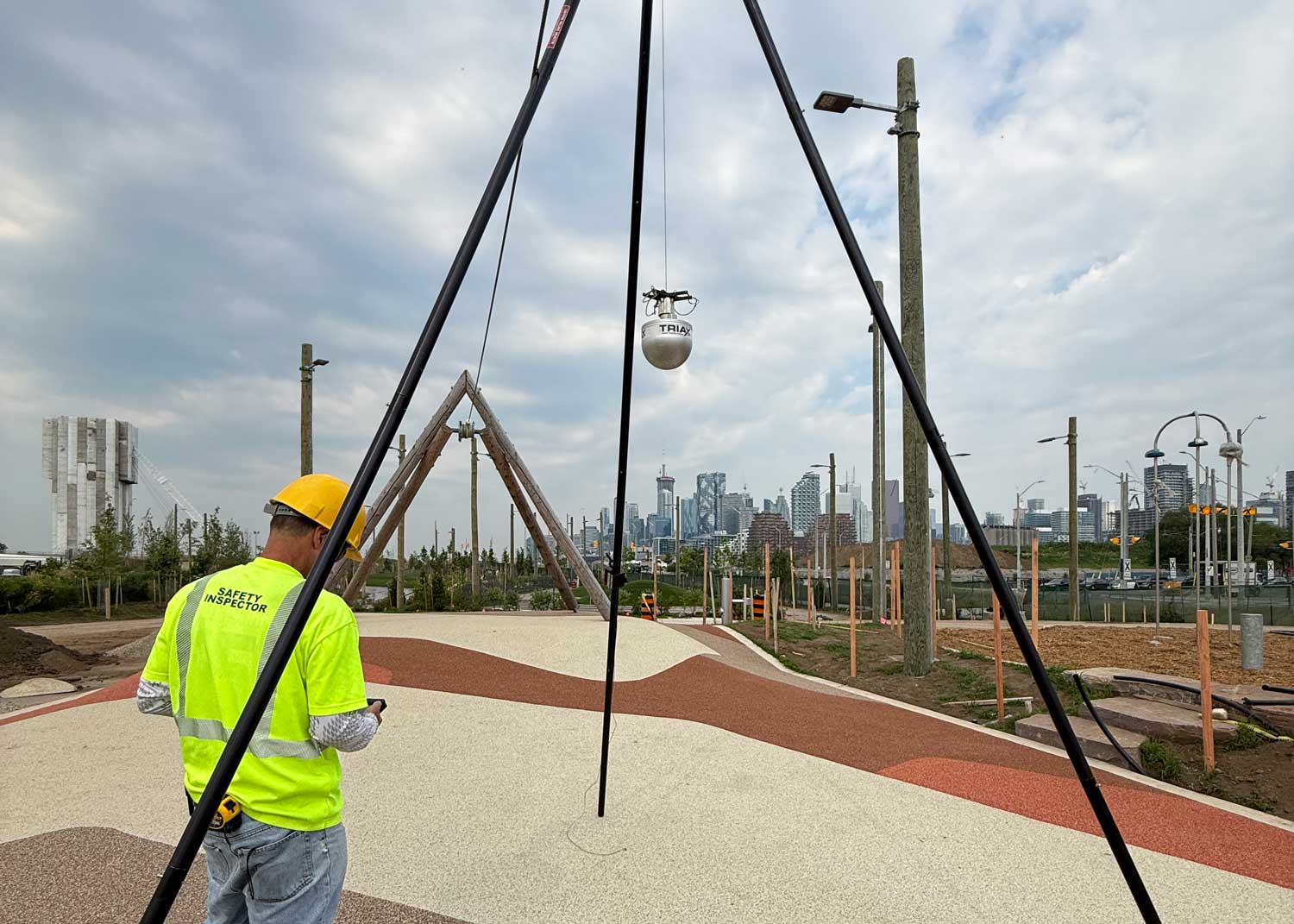
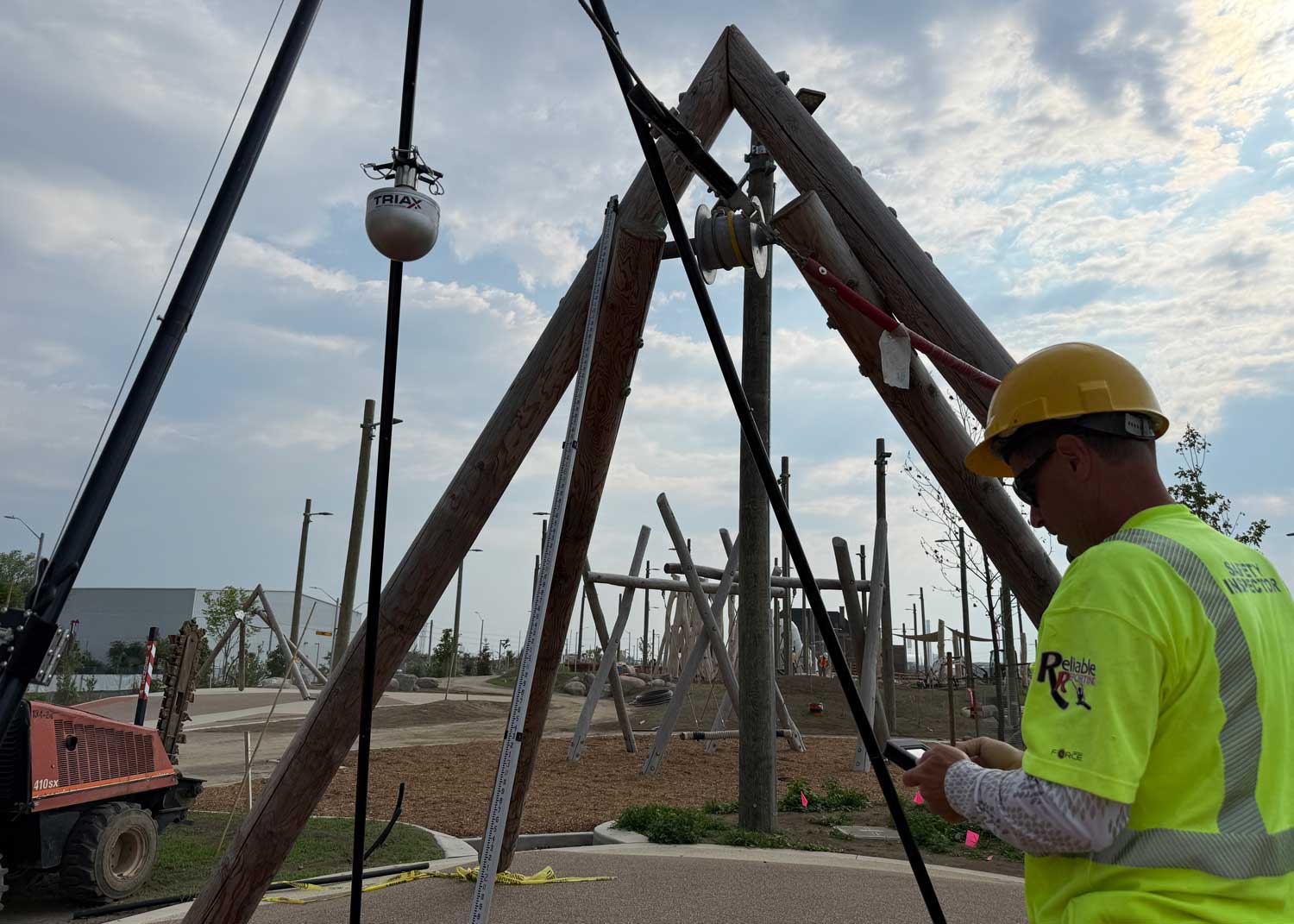
Playground surface drop tests use specialized equipment such as the Triax Impact Testing System. The testing process follows ASTM F3313 standards for field testing and compares results with ASTM F1292 laboratory standards. Typically, a certified playground inspector carries out the test, following these steps:
- Calibration check – A rubber sample is tested three times, with the last two readings averaged. These must fall within 5% of the manufacturer’s calibration standard.
- Record conditions – The inspector measures surface temperature and depth at each test location.
- Select test sites – Three adverse (likely worst-case) spots around each composite play structure are chosen. Each site undergoes three drops, with the last two averaged.
- Determine drop height – Based on either the equipment’s designated fall height (per manufacturer and ASTM 1487) or the client’s specification (not below fall height).
- Time intervals – After each drop, the inspector waits 1.5 minutes before conducting the next.
- Prepare loose-fill surfaces – For surfaces like engineered wood fiber or mulch, the inspector pre-compacts the drop area with a 15-pound weight.
- Document results – A comprehensive report is created, including drop data, site conditions, photos, inspector credentials, and agency details.
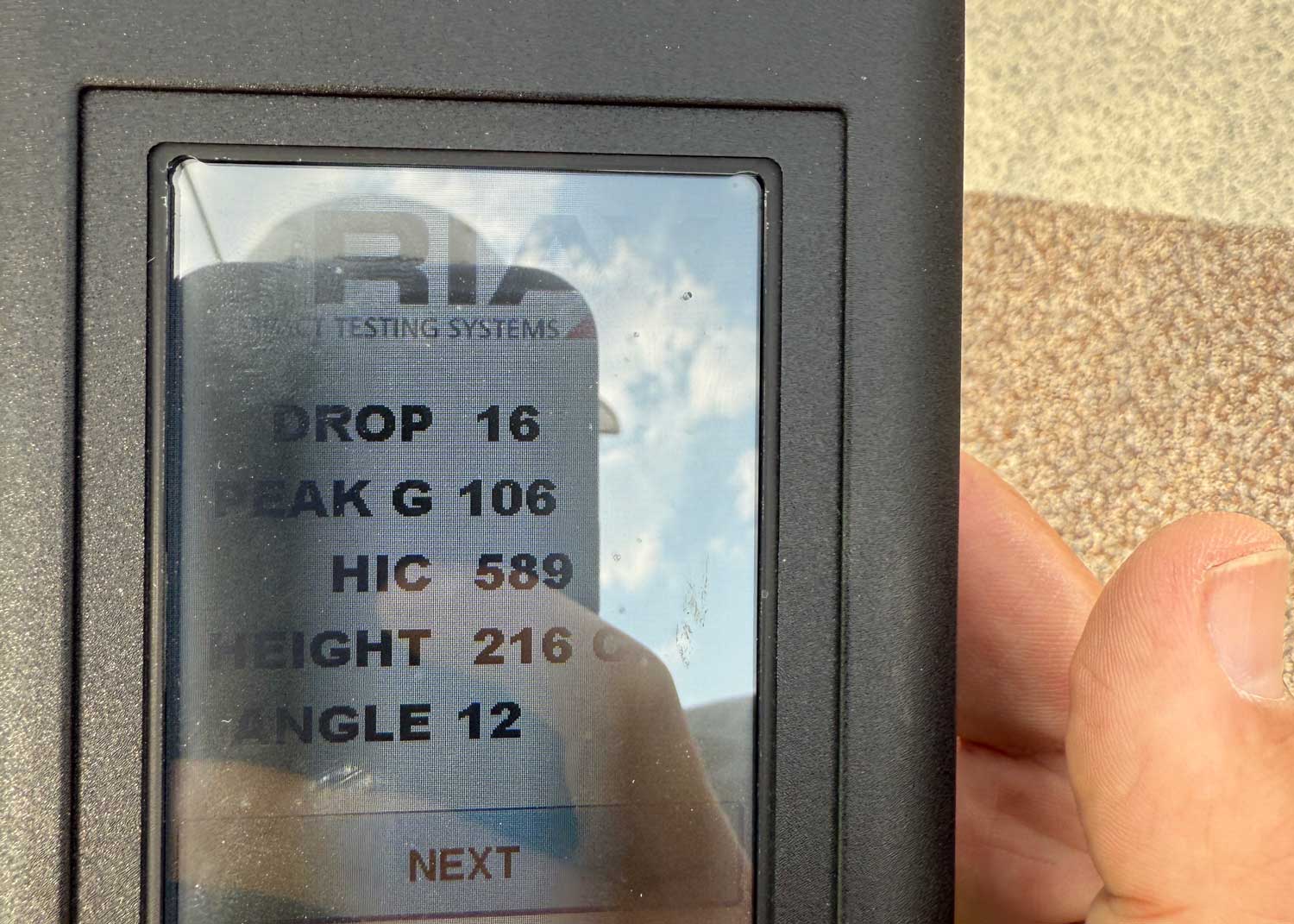
Why Documentation is Crucial
Maintaining records of your TRIAX HIC and GMAX test results is essential. These benchmarks provide:
- A reference point for future testing.
- Evidence of compliance with safety standards.
- Critical documentation in the unfortunate event of an accident.
Final Thoughts
Playground surfaces are not just about aesthetics—they are a frontline defense against life-changing injuries. Regularly testing and maintaining them ensures children can play, explore, and grow in the safest possible environment.