
When planning a playground, one of the most important decisions you’ll make isn’t the equipment — it’s the surface beneath it. Playground surfacing plays a key role in safety, accessibility, long-term performance, and overall enjoyment. With so many materials available, picking the right one can feel overwhelming. This guide breaks down common options and what you should consider when choosing the best surfacing for your project.
Why Surface Choice Matters
Playground surfacing is more than just a finish — it’s a safety system. The right surface:
- Cushions falls and reduces injury risk
- Supports ADA accessibility and mobility devices
- Improves drainage and weather performance
- Influences maintenance and lifecycle costs
Different materials deliver different benefits, so it’s important to match your goals, budget, and environment with the right surface type.
Common Playground Surfacing Options
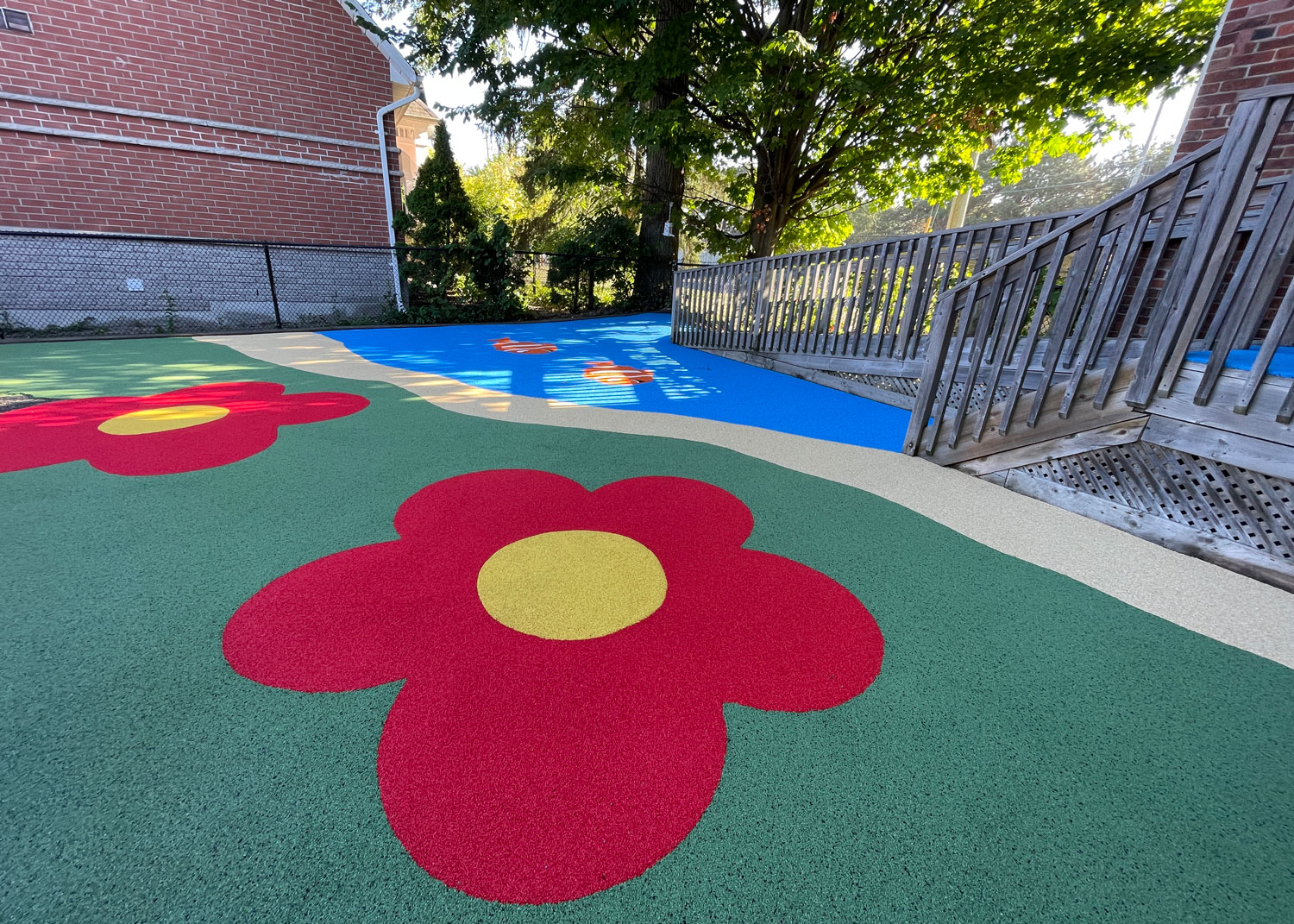
Poured-in-Place (PIP) Rubber
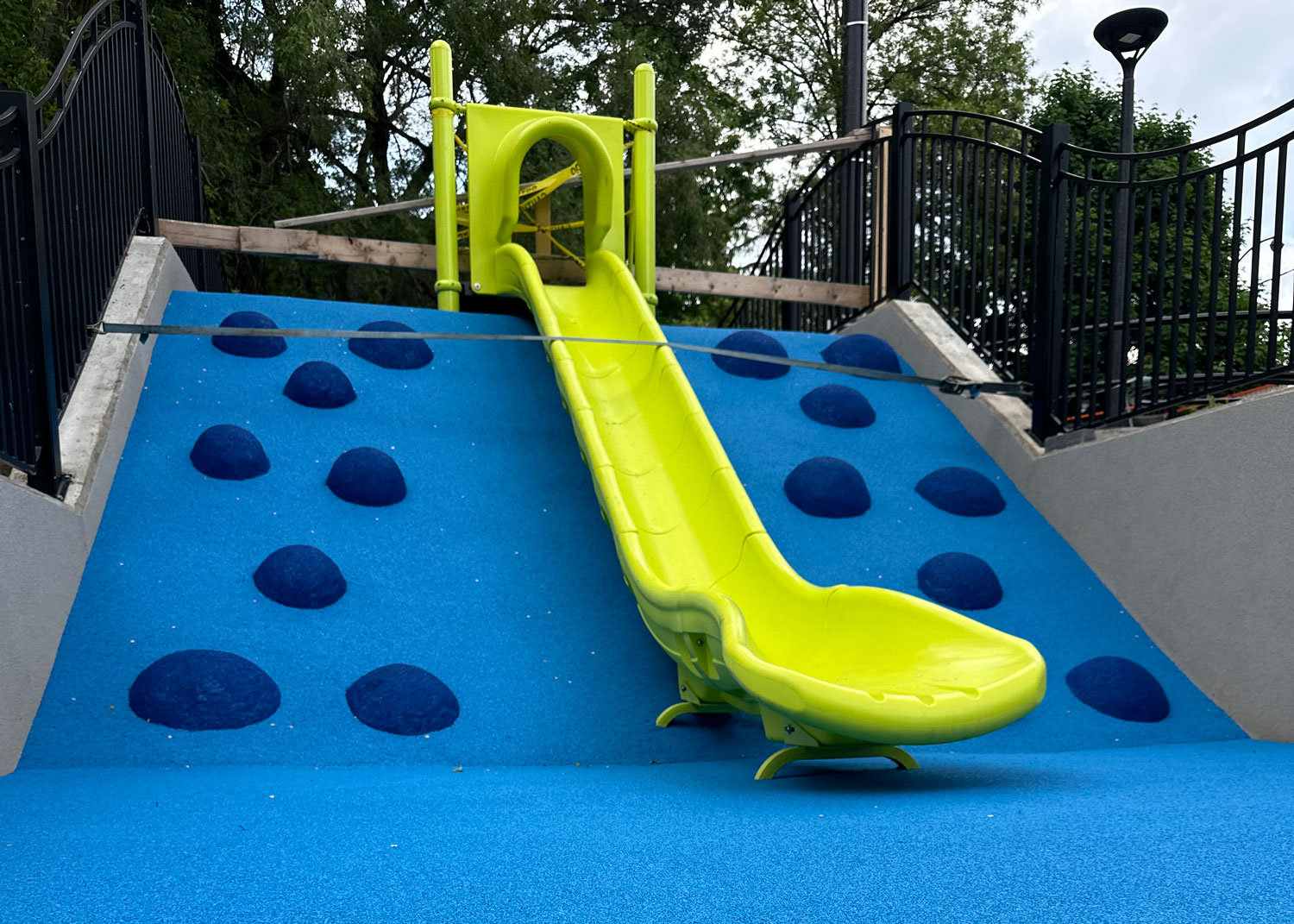
Poured-in-Place rubber is one of the most advanced and durable playground surfaces available. Installed on-site, this seamless system combines recycled rubber granules with binding agents to create a continuous safety surface that can be customized in color and design.
Benefits:
- Excellent impact absorption and fall protection
- ADA compliant with smooth, wheelchair-accessible finish
- Long-lasting with low long-term maintenance
- Fully customizable appearance
Considerations:
- Higher upfront cost
- Professional installation recommended
PIP rubber is ideal for schools, parks, and high-use environments where safety and durability are top priorities.
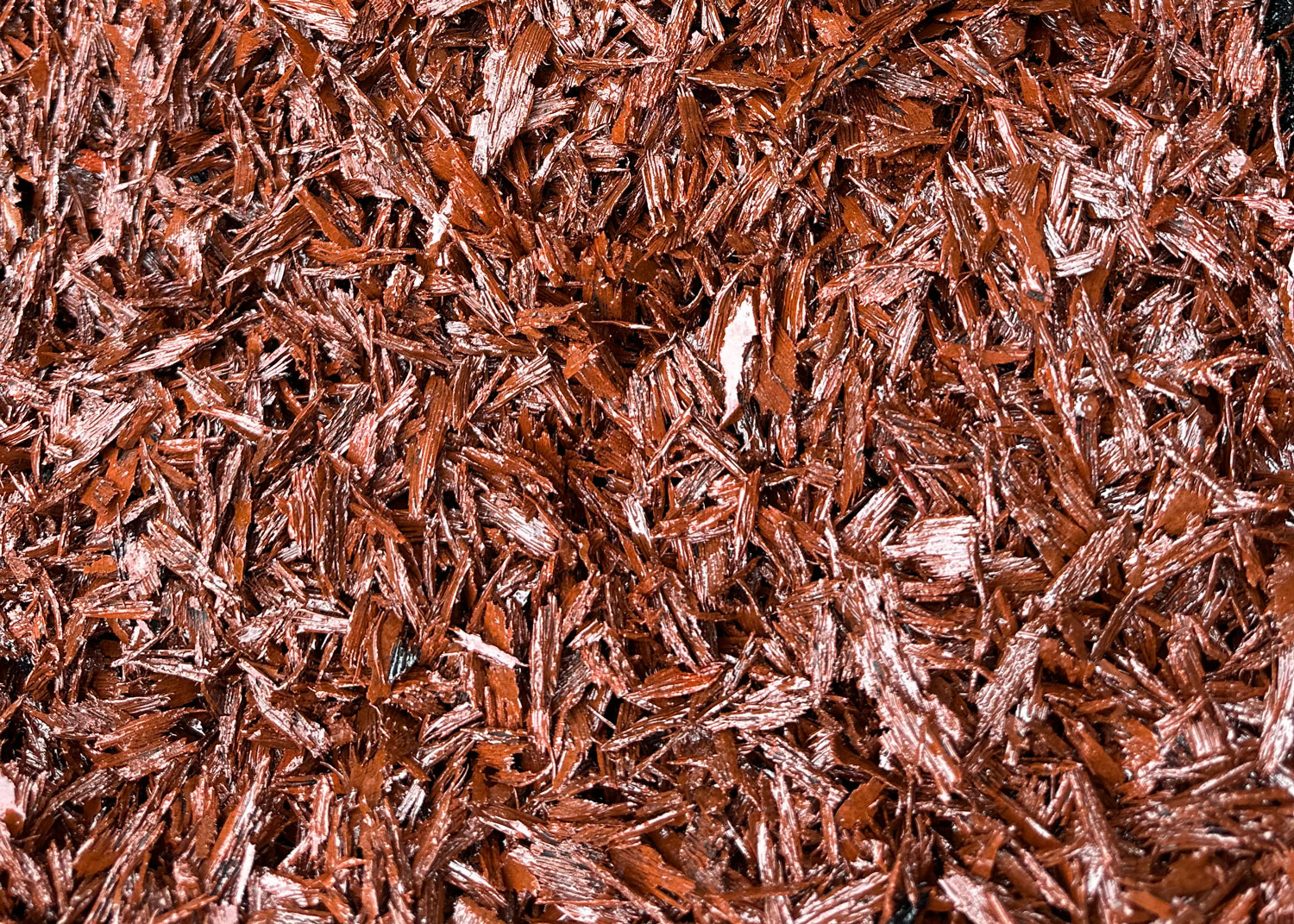
Bonded Rubber / Rubber Mulch
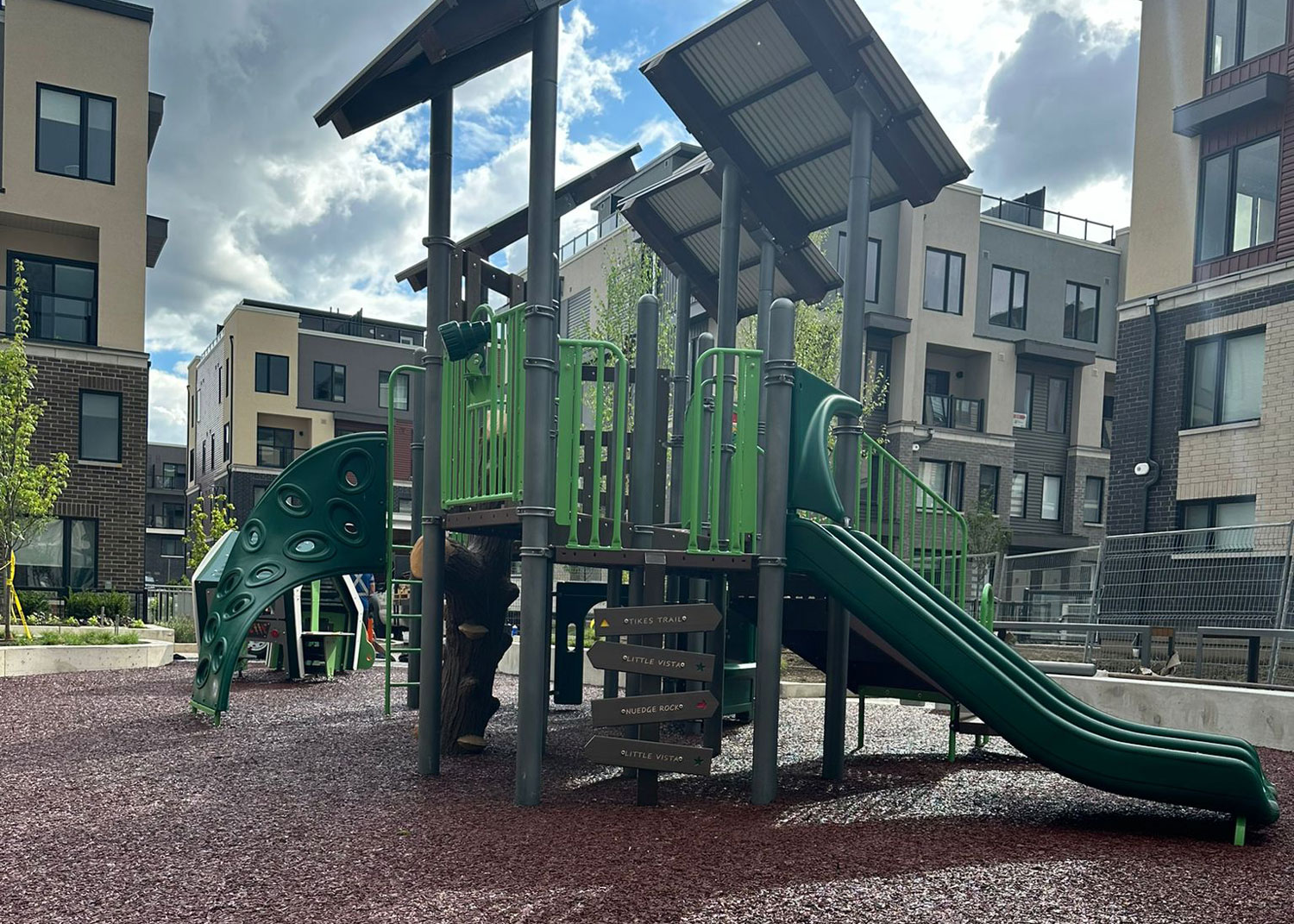
Bonded rubber surfaces are created by adhering recycled rubber pieces together to form a uniform slab, while loose rubber mulch is a recycled option similar to wood chips but heavier and more resilient.
Benefits:
- Good shock absorption
- Low maintenance compared with loose organic materials
- Natural look with rubber mulch
Considerations:
- Not as long-lasting or customizable as PIP
- Loose options can shift and require periodic redistribution
These surfaces are often chosen for community parks and residential playgrounds seeking a balance of safety and affordability.
Artificial Turf
Synthetic turf has grown in popularity thanks to its natural look, excellent drainage, and ADA accessibility.
Benefits:
- Natural grass appearance with low maintenance
- Strong drainage that dries quickly after rain
- Comfortable underfoot and suitable for active play
Considerations:
- Can retain heat in direct sun
- Higher upfront installation cost than loose-fill materials
Turf works well for playgrounds adjacent to sports fields or community spaces where appearance and all-weather usability are important.
Engineered Wood Fiber (EWF) and Other Organic Materials
Traditional wood products — like engineered wood fiber — offer a natural aesthetic and lower initial cost.
Benefits:
- Budget-friendly initial investment
- Natural look that fits park settings
- Considerations:
- Requires regular maintenance and replenishing
- Can compact or decompose over time
- Less ADA-friendly than unitary surfaces
These materials are often selected for smaller or budget-constrained projects but may involve more upkeep over the long run.
Choosing the Right Surface for Your Needs
Here are a few questions to help guide your decision:
✅ What’s your budget? Higher-end unitary surfaces like PIP rubber and turf offer long life and low maintenance, while organic or loose-fill options have lower upfront cost but higher upkeep.
✅ How important is accessibility? ADA compliance and smooth wheelchair access are easiest to achieve with poured-in-place rubber, rubber tiles, or turf.
✅ How heavy will use be? High-traffic playgrounds benefit from durable, low-maintenance surfaces that absorb impact and stand up to weather and wear.
Final Thoughts
Selecting the right playground surface sets the foundation for safety, usability, and longevity. Prioritizing impact protection, accessibility, aesthetics, and maintenance needs will help ensure your project delivers a space where kids — and communities — can play confidently for years to come.
If you’re unsure which option fits your project best, reach out to our team — we’re happy to guide you through options and help tailor a solution to your goals.