


If you’re new to installing poured-in-place rubber surfaces, you may have run into this puzzling scenario: you carefully mix and trowel a new surface—or patch a hole—only to find that a few days later, the color of the EPDM granules has completely changed. You double-check the batch, and yes, you used the right colour. What happened?
Welcome to the ambering effect of aromatic binders.
Aromatic vs. Aliphatic Binders
Polyurethane binders used in poured-in-place surfaces—whether playground flooring, running tracks, or pool decks—fall into two categories:
- Aliphatic binders:
- Clear in appearance.
- Highly resistant to chlorine and chemicals.
- Often used around pools and splash pads.
- Ideal when EPDM granules need to retain their original colour.
- Aromatic binders:
- The industry standard for playgrounds and running tracks.
- Widely available and cost-effective (about a third the price of aliphatic binders).
- Provide excellent tensile strength.
- Drawback: prone to discoloration from UV exposure, leading to ambering or yellowing of granules.
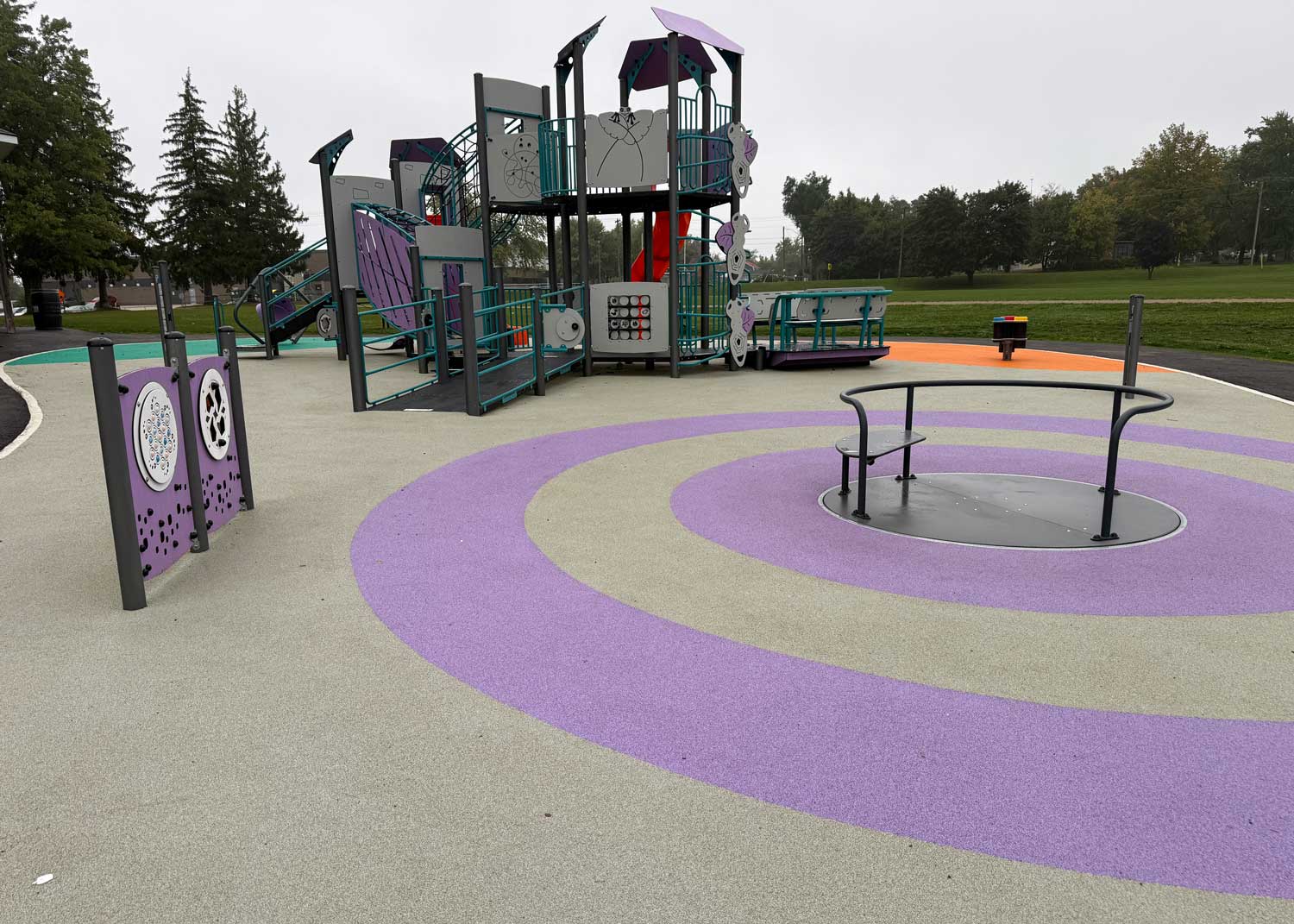
Colors Most Affected
Certain shades are more susceptible to ambering when aromatic binders are used, including:
- White
- Eggshell
- Sand
- Blues
- Purple
- Lilac
- Medium Grey
- Light Grey
- Pinks
Why Ambering Happens
Aromatic binders are not UV stable. When exposed to sunlight, they cause a yellowish film to form on the surface, altering the granule color. The degree of ambering depends on:
- Time of day during installation – A surface troweled in the morning may amber differently than one troweled in the afternoon, even with the same materials.
- Sun exposure – Surfaces under shade structures or trees will discolour differently compared to those in direct sun.
Burn-Off: The Natural Solution
The good news is that ambering is temporary. Over time, as the thin film of aromatic binder on the surface breaks down with foot traffic and use, the original color re-emerges. This process is called burn-off.
Final Thoughts
Aromatic binders are popular for good reason—they’re strong, cost-effective, and reliable. But if you’re working with lighter or more UV-sensitive colours, be prepared for temporary ambering. With time the surface will return to its intended appearance.