

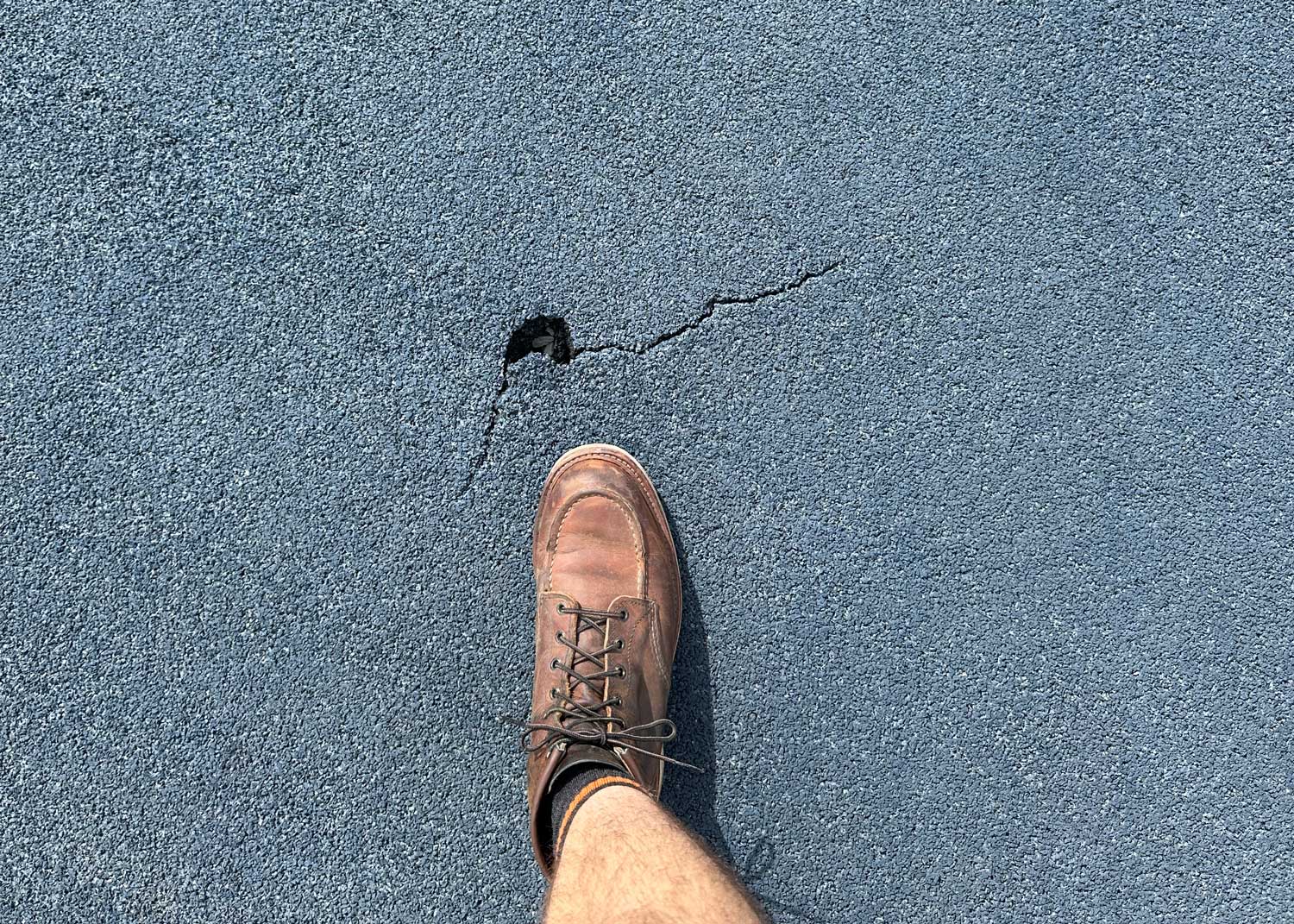
Playground rubber flooring, often referred to as poured-in-place rubber, is known for its resilience. Its top wear layer, typically a half-inch of durable EPDM (ethylene propylene diene monomer) rubber, is designed to protect and encapsulate the softer impact attenuation layer beneath.
But when cracks appear in this wear layer—even small hairline cracks—it’s usually a sign of deeper issues. Based on experience, here are the most common causes of cracks in poured-in-place rubber systems and what you can do about them.
1. Wear Layer Too Thin
Over time, the wear layer can erode to the point where it no longer has the tensile strength to hold together. This is often the stage just before holes begin to form.
- Minor cracking: If the cracks are limited, you may be able to use a rubber repair kit to patch them, followed by sealing the entire surface to prevent further deterioration.
- Widespread or deep cracking: If cracks are extensive, sealing alone won’t work. In this case, applying a poured-in-place rubber extender may help prolong the surface’s life.
2. Installation in Cold Temperatures
Poured rubber must be installed under proper weather conditions. If it’s applied in temperatures that are too cold, the binders cannot cure correctly. The result is a systemic failure of the wear layer—cracks appear everywhere across the surface.
- Solution: Unfortunately, spot fixes won’t work here. The only viable option is to recap the entire surface.
3. Poor-Quality Binders
The binder is the most critical (and most expensive) component of a poured rubber system. However, some installers cut costs by using cheap, substandard binders, often sourced overseas. When this happens, cracks inevitably form throughout the wear layer.
- Solution: If binder quality is the issue, the only remedy is a full recap of the wear layer.
Key Takeaway
Cracks in playground rubber flooring should never be ignored. Whether caused by normal wear, poor installation conditions, or low-quality materials, cracks indicate that the integrity of the surface is compromised. Addressing the issue quickly—whether with minor repairs, sealants, or a complete recap—will help extend the life of the surface and keep the playground safe for children.